Conversation with Fujiko Nakaya and Anne-Marie Duguet
ARCHIVE
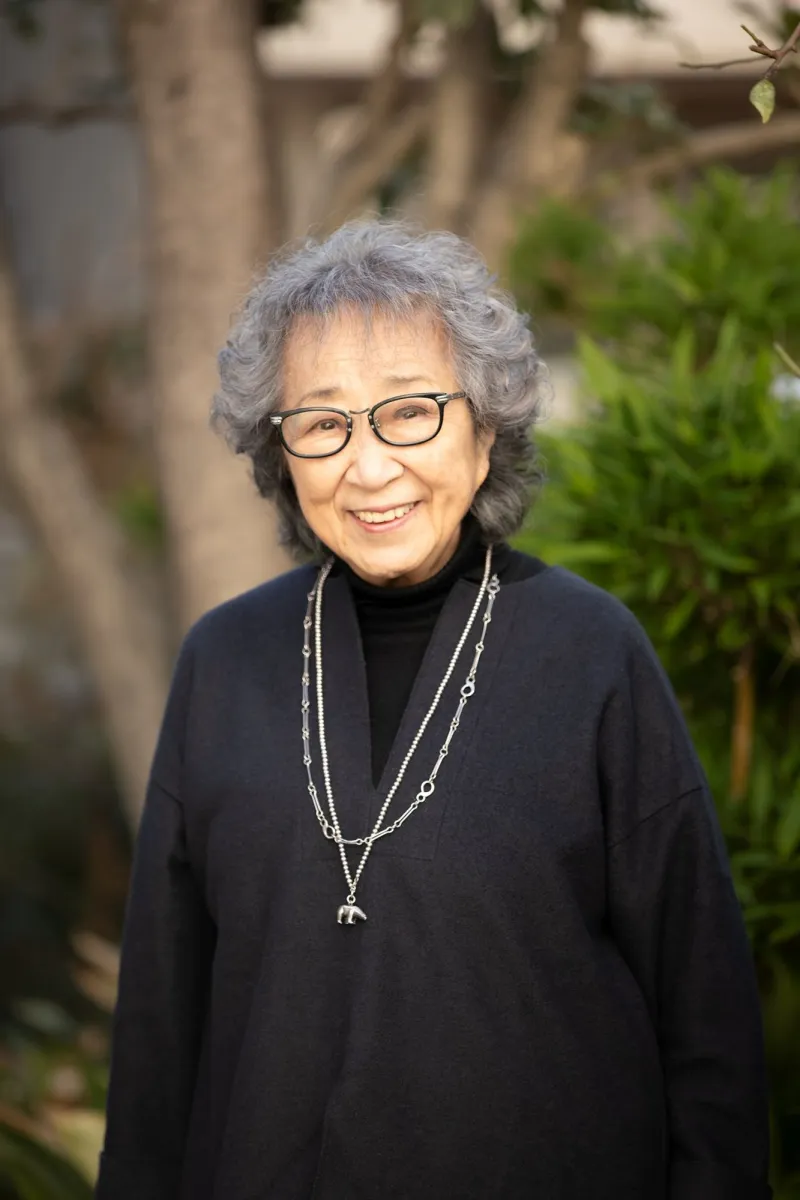
In resonance with her "Fog Sculpture" Cloud #07156, which envelops the Rotunda of the Bourse de Commerce, artist Fujiko Nakaya reflects on her practice of fog sculpture, using natural phenomena and technological systems as an artistic medium. This conversation with art historian Anne-Marie Duguet, moderated by Nicolas-Xavier Ferrand (Research Associate at the Pinault Collection), explores the aesthetic and historical dimensions of her work.
Fujiko Nakaya’s first “fog sculpture” emerged from experiments conducted with engineer Thomas Mee to produce, using pure water, a non-chemical fog covering the dome of the Pepsi Pavilion at Expo ’70 in Osaka. This pioneering project initiated a body of work that now comprises around one hundred installations.
Her practice also extends the research of her father, physicist Ukichiro Nakaya, who developed a method for creating artificial snow crystals in 1936. This lineage establishes a dialogue between art and science through the observation and formation of natural phenomena, sustaining a shared attitude of attentiveness and humility toward nature.
Like atmospheric fog, Nakaya’s fog reproduces the conditions of its own formation: both artificial and natural, it depends entirely on weather conditions and the subtle variations of its environment. The artist orchestrates its emergence and then allows nature to take over, creating a form of collaboration. She describes this process as “negative sculpture,” making the invisible visible: wind, body heat, and air circulation.
The experience unfolds on two levels: from the outside, it invites contemplation and reflection on time, life, and ephemerality; from within, it offers a sensory immersion in which perception becomes unsettled, the hand cannot grasp anything, and the body becomes a sensitive surface, enveloped by the very material of the work. As Fujiko Nakaya explains: “I want to change the image of fog. Instead of people saying, ‘I can’t see this beautiful landscape because of the fog,’ perhaps someone will think, ‘The fog is so beautiful on the mountain.’”
Always conceived in situ, her works engage with diverse environments – indoors and outdoors alike –valleys, mountains, rivers, architectural spaces, and exhibition contexts, and often involve collaborations with artists from other disciplines, including David Tudor, Ryuichi Sakamoto, Trisha Brown, Min Tanaka, and Gisèle Vienne.
Anne-Marie Duguet is Professor Emerita at Université Paris 1 Panthéon-Sorbonne, art critic, and curator. Her publications include Vidéo, la mémoire au poing (Hachette, 1981), Jean-Christophe Averty (Dis-voir, 1991), Déjouer l’image. Créations électroniques et numériques (Jacqueline Chambon, 2002), as well as numerous texts on art and media. She has curated exhibitions including Jean-Christophe Averty. Collages, découpages (Espace Electra, Paris, 1991), Thierry Kuntzel (Jeu de Paume, Paris, 1993), Smile Machines (Akademie der Kunst, Berlin, 2006), peter campus video ergo sum (Jeu de Paume, Paris, 2017), and co-curated the Artifices Biennial (Saint-Denis, 1994 and 1996). Since 1995, she has directed the multimedia collection anarchive, dedicated to artists including Muntadas, Michael Snow, Thierry Kuntzel, Jean Otth, Fujiko Nakaya, Masaki Fujihata, and Peter Campus. She received the Media Art History Award in 2019.
Japanese artist Fujiko Nakaya (b. 1933 in Sapporo, Japan) became well known as a member of the New York collective Experiments in Arts and Technology (E.A.T.) in the 1960s. Already at the beginning of her career as a painter, she quickly became inspired by movement and natural phenomena, which led her to develop her own “fog sculptures”, the first of which she created for the Pepsi Pavilion at Expo ‘70 in Osaka. Since then, Nakaya has created emblematic installations the world over using her high-pressure fogging technique.