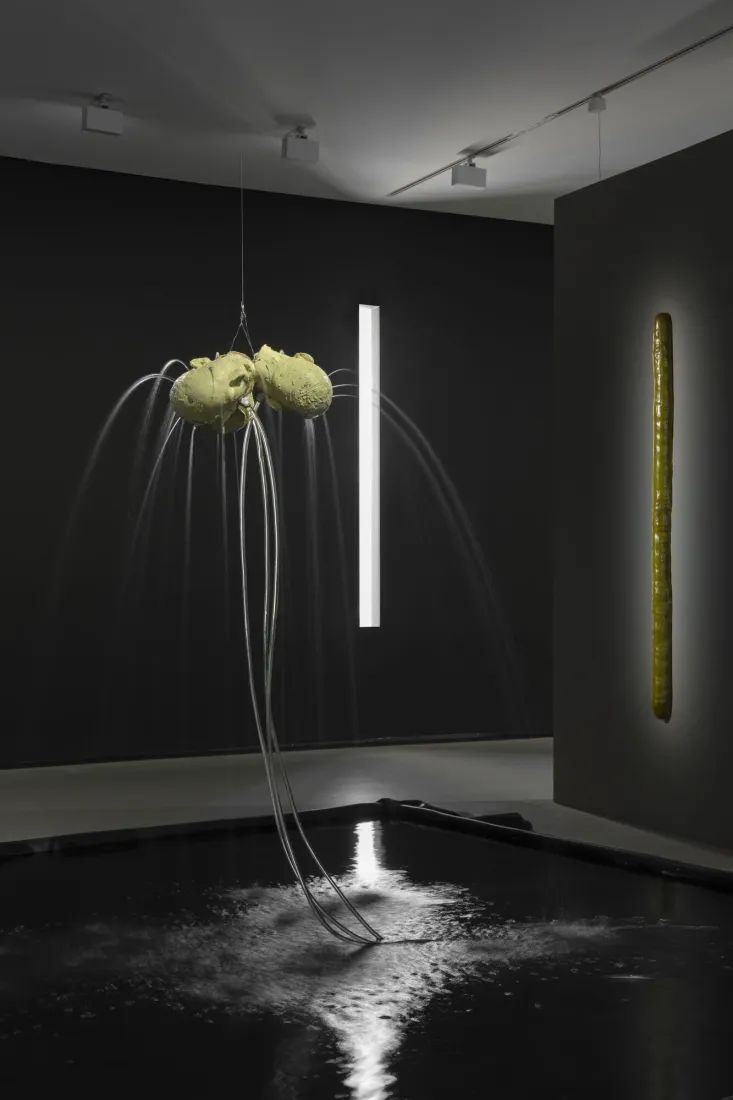
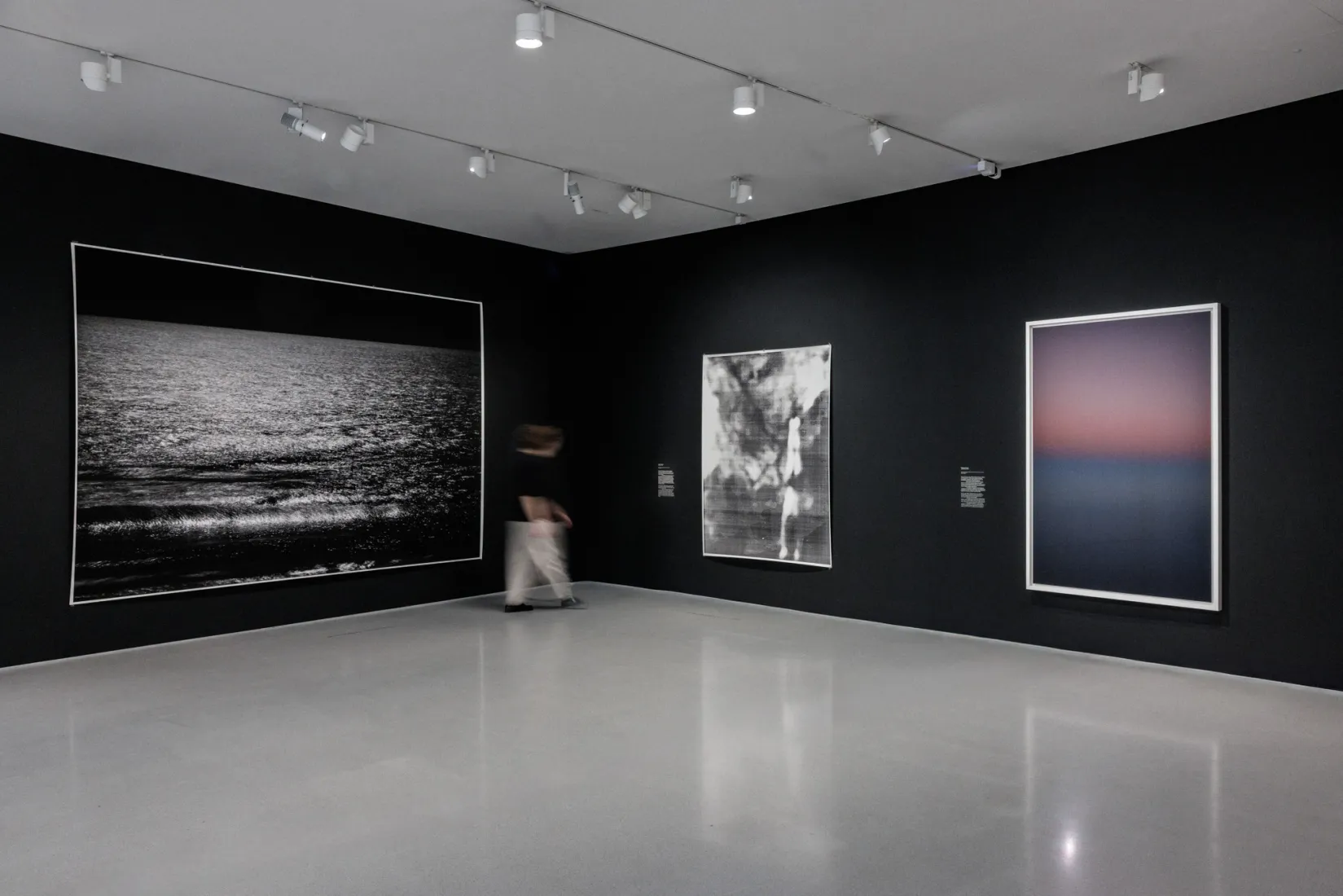
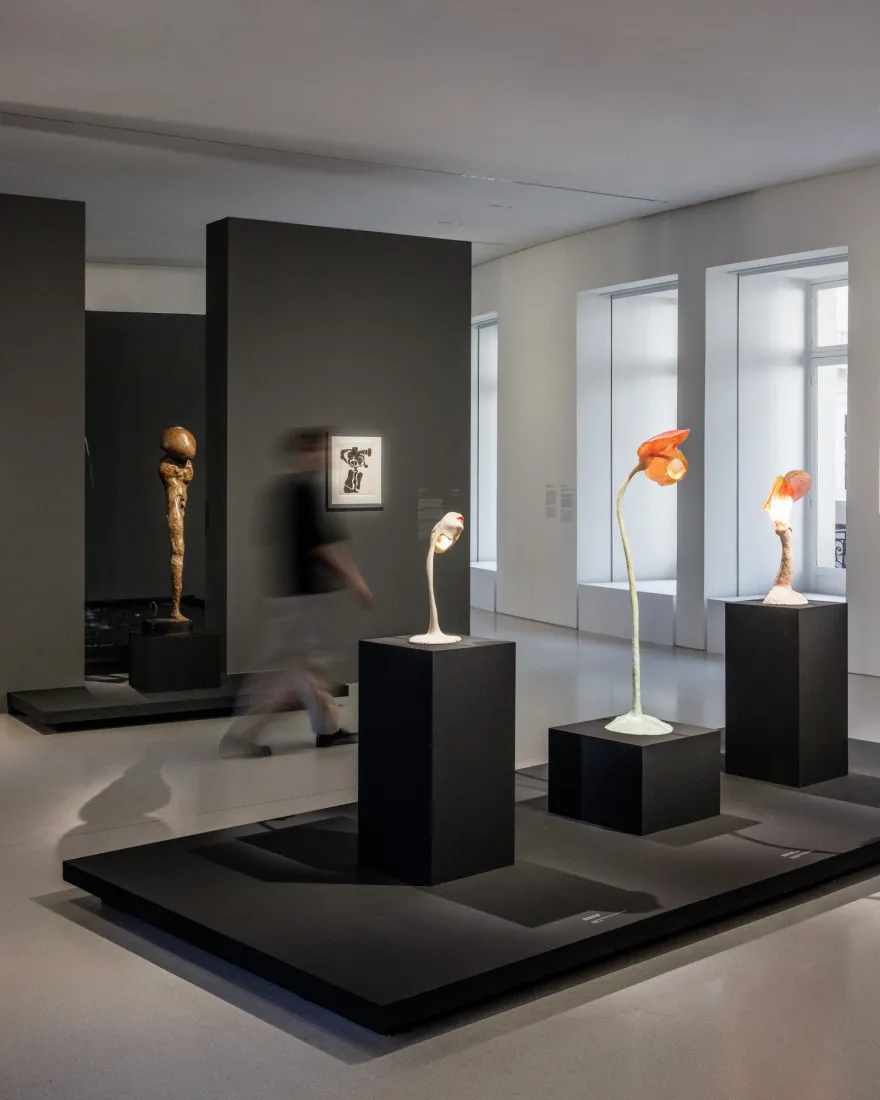
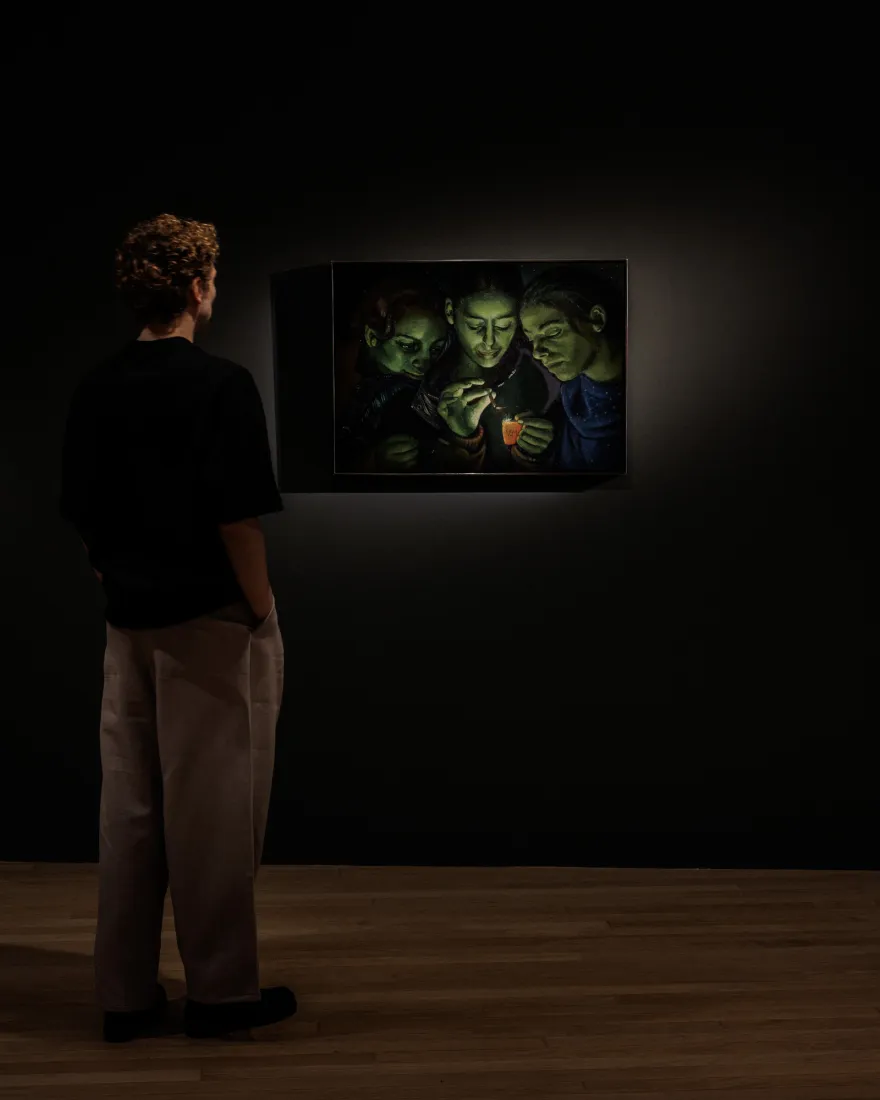
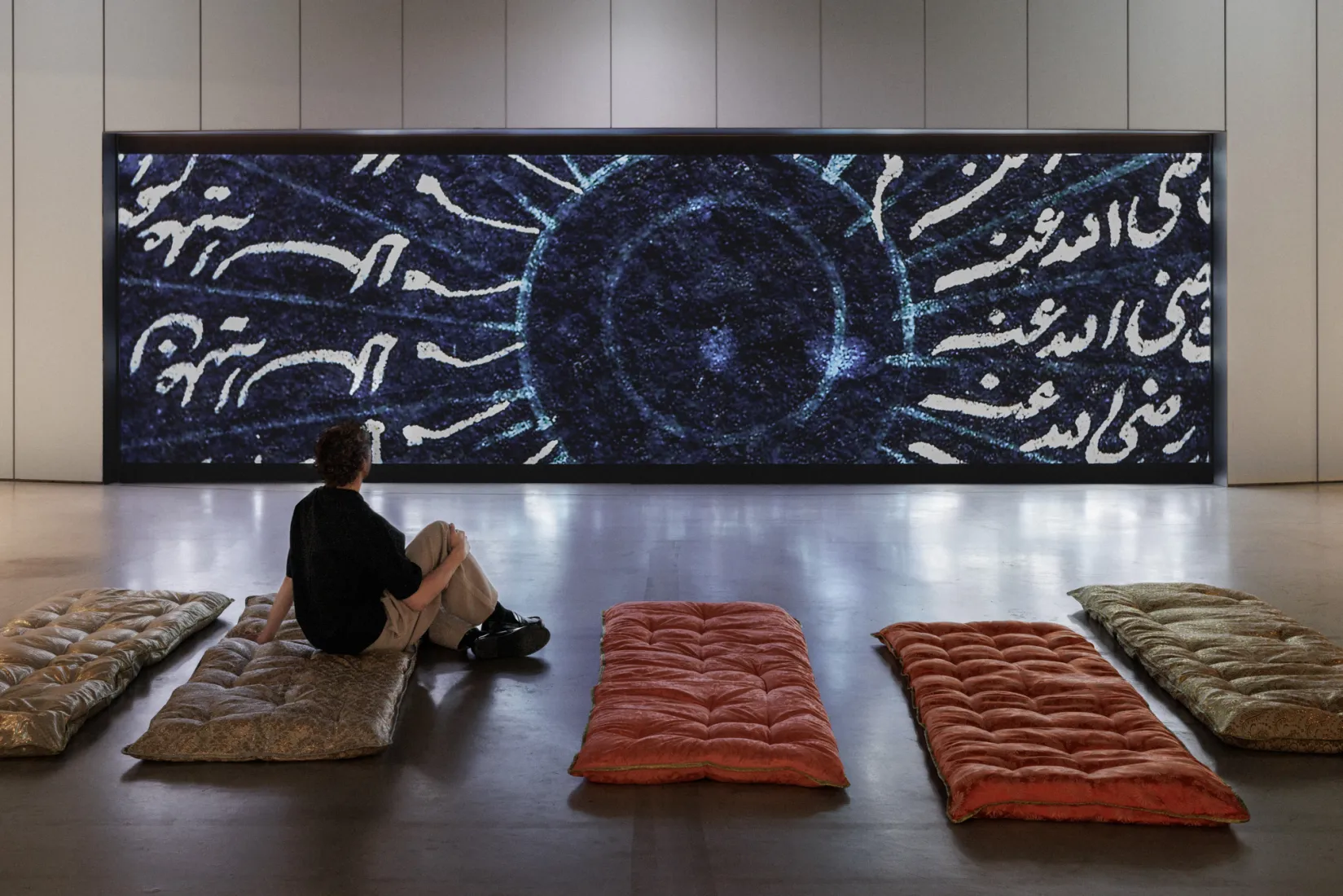
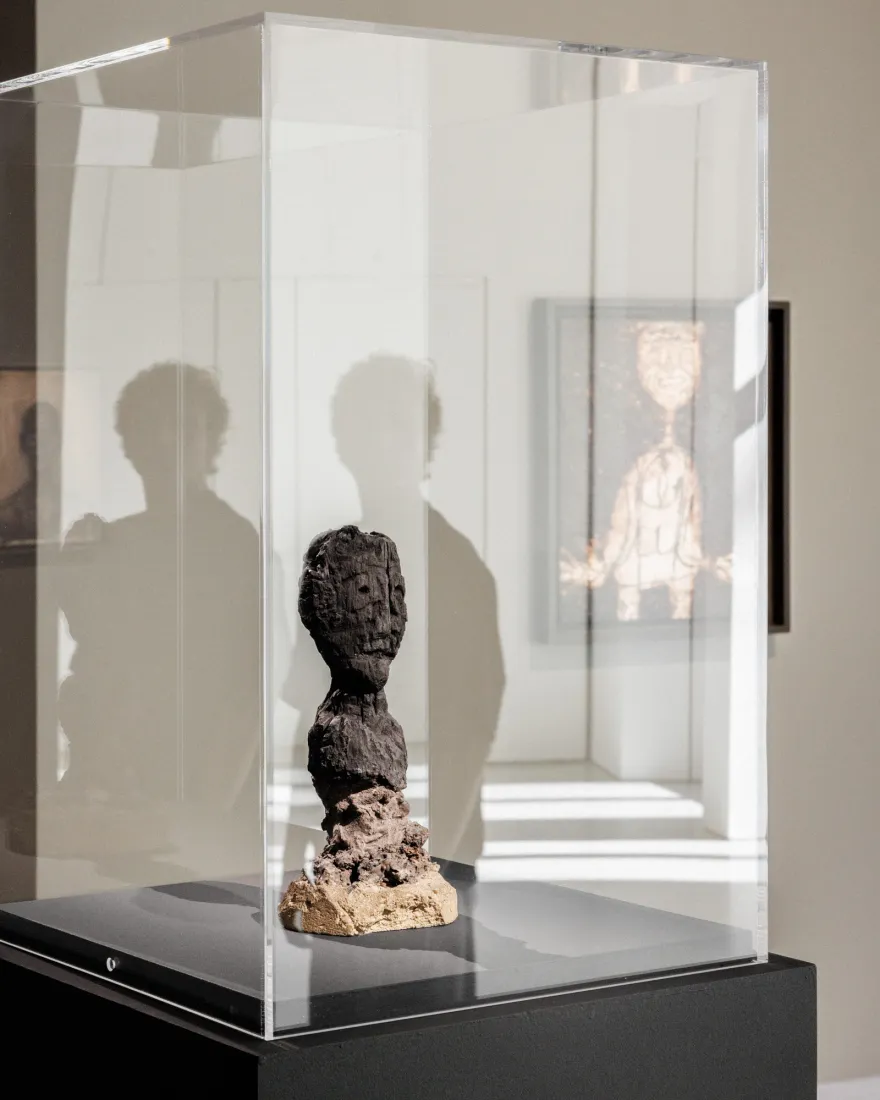
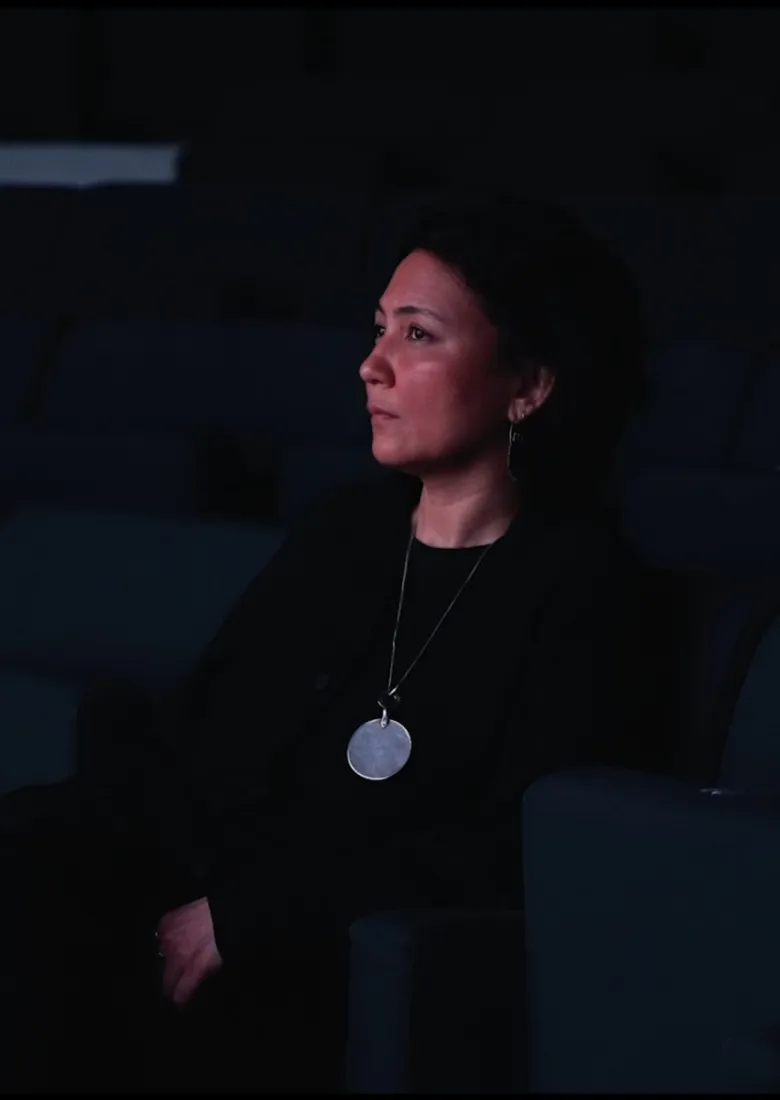
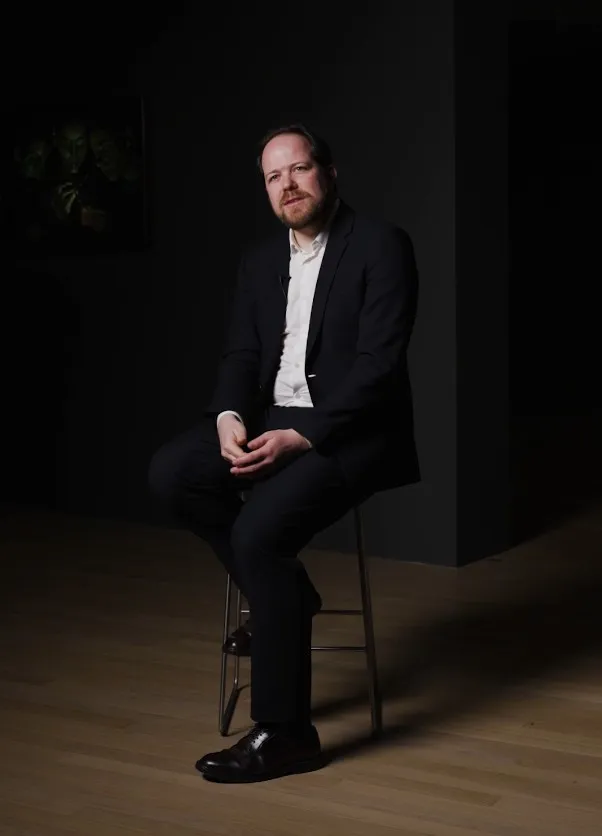
The Bourse de Commerce has been transformed into a luminous and crepuscular landscape, offering visitors a sensory experience in which the visible meets the invisible. Chiaroscuro thus emerges as a renewed visual and symbolic language, a narrative device, and a philosophical principle, expressing both the materiality of light and the shadow areas of our unconscious.
“A contemporary is someone who, in taking a look at his era, surveys the shadows instead of the lights. All times are dark for those who experience their contemporaneity. Thus, a contemporary is someone who knows how to see this darkness, who is able to write by dipping his pen in the darkness of the present”. — Giorgio Agamben
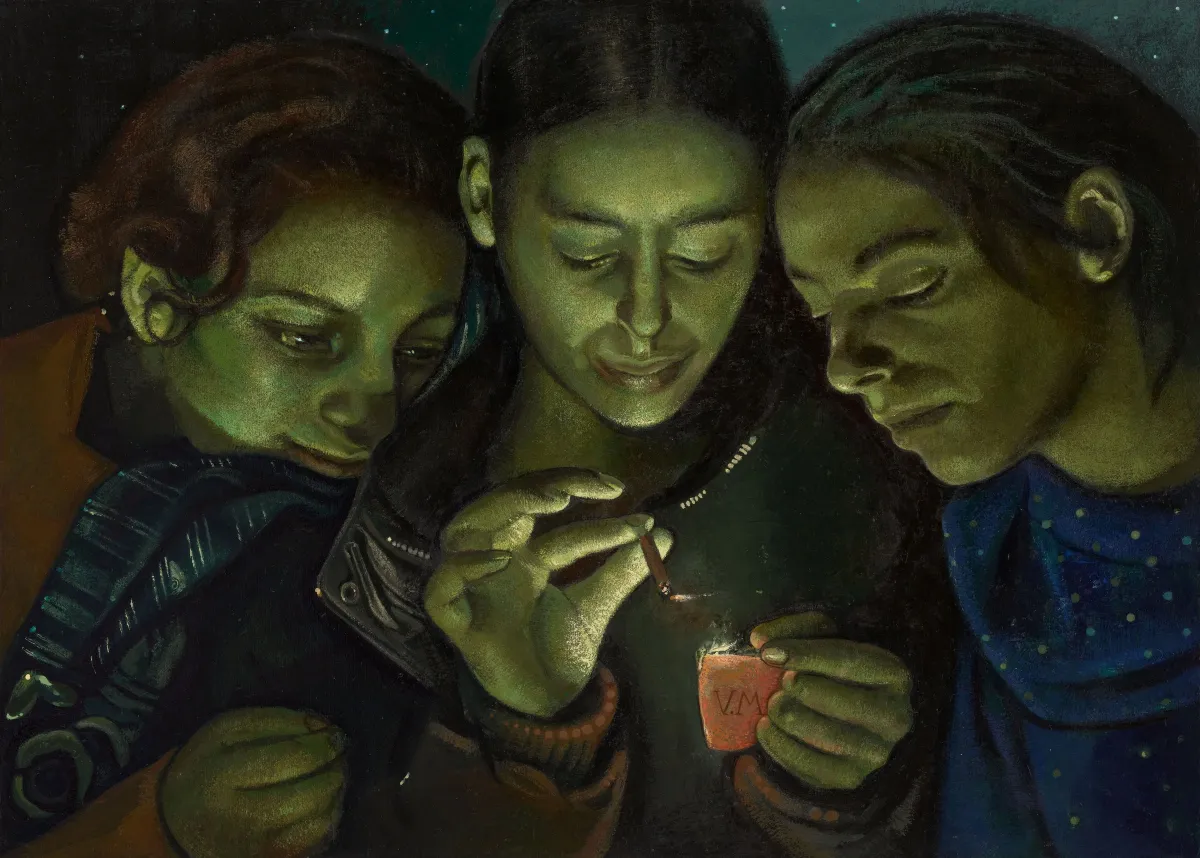
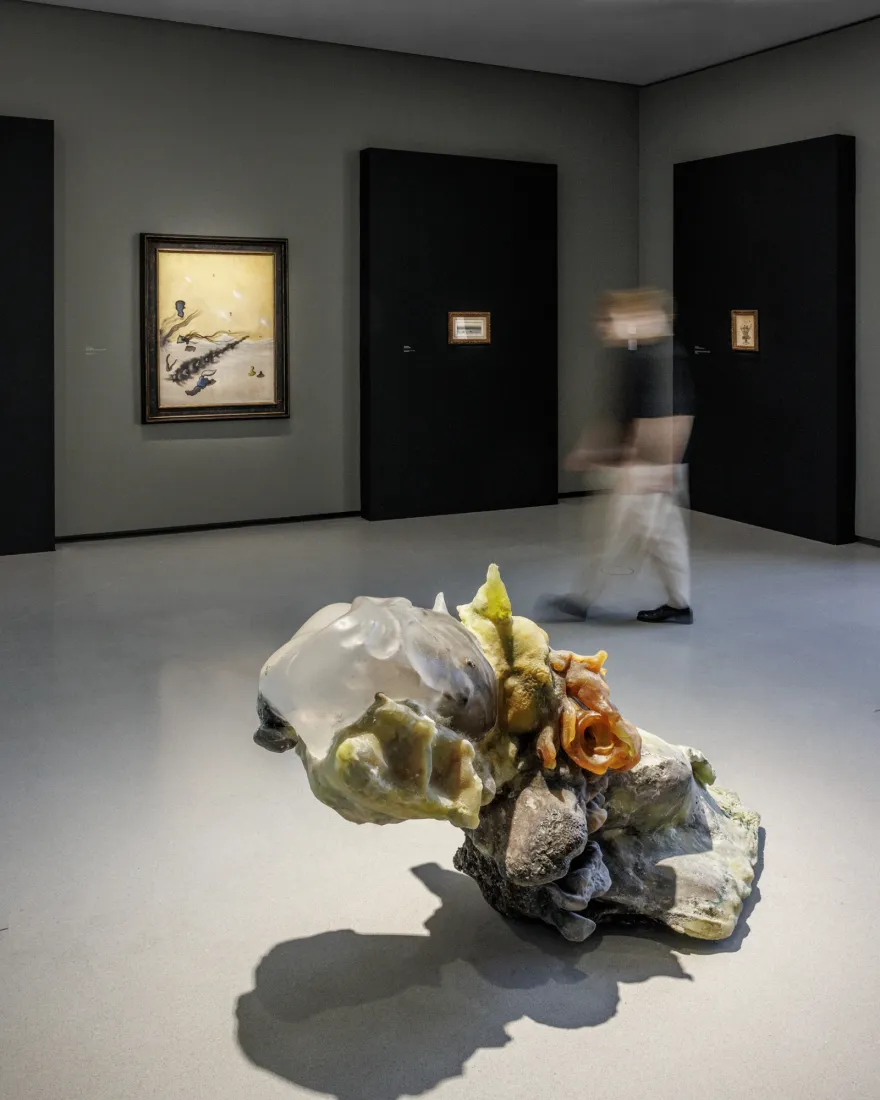
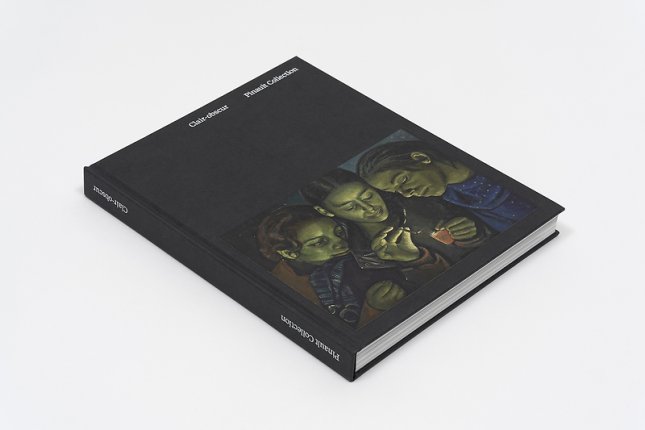
Drawing on the ideas of the Italian philosopher Giorgio Agamben, the exhibition "Clair-obscur" transforms the spaces of the Bourse de Commerce into a landscape that is both luminous and crepuscular, in which some one hundred works from the Pinault Collection are revealed in an interplay of light and shadow. Using this Italian philosopher’s thoughts as a starting point, the exhibition takes its title from the famous technique of chiaroscuro that first emerged in Mannerist and Baroque paintings in the sixteenth century, most notably in the works of Caravaggio, who intensified its use, plunging the earthly worldinto a deep darkness penetrated by rays of light that heighten the sense of dramatic tension and the spiritual questions underlying his paintings. In continuation of this journey into the heart of darkness, Goya expressed all the darkness of humanity in his work, and the chiaroscuro he perfected continues to impact contemporary works with its sense of depth and mystery, such as Sigmar Polke’s hallucination of a chapel, Axial Age (2005-2007), on view until August 9. Philippe Parreno, who reinterprets the black paintings of the Quinta del Sordo by candlelight, reminds us how much this alchemical cycle opened the floodgates of our modern sensibility. Chiaroscuro thus emerges as a renewed visual and symbolic language, a narrative device, and a philosophical principle. It expresses the materiality of light and the shadow areas of our subconscious, thus transforming our sense of the visible and the invisible. The influence of this pictorial sensibility is also palpable in the muted palette of Victor Man’s enigmatic, melancholy canvases—a series of which is featured in Gallery 3—and the highly poetic works of Bill Viola, which, inspired by the old masters, depict figures emerging from the shadows in slow motion.
Laura Lamiel has placed works in the twenty-four display cases in the Passage that harbour moods, atmospheric murmurs, and materialist chimeras. These pieces strive to give shape to the invisible and the volatile: memory, affects, emotions, and states of mind that she draws from the shadows and brings to life with light, as she says, ‘animatedly, as if I were working with brushes’. This carte blanche brings together a corpus of installations that have been envisioned specifically for this occasion. Light and colour play an essential role in this repertory of sensory forms that consist of found objects, collections, and taxonomies of materials that contrast with the immaculate surfaces of the steel that she lights with fluorescent tubes.
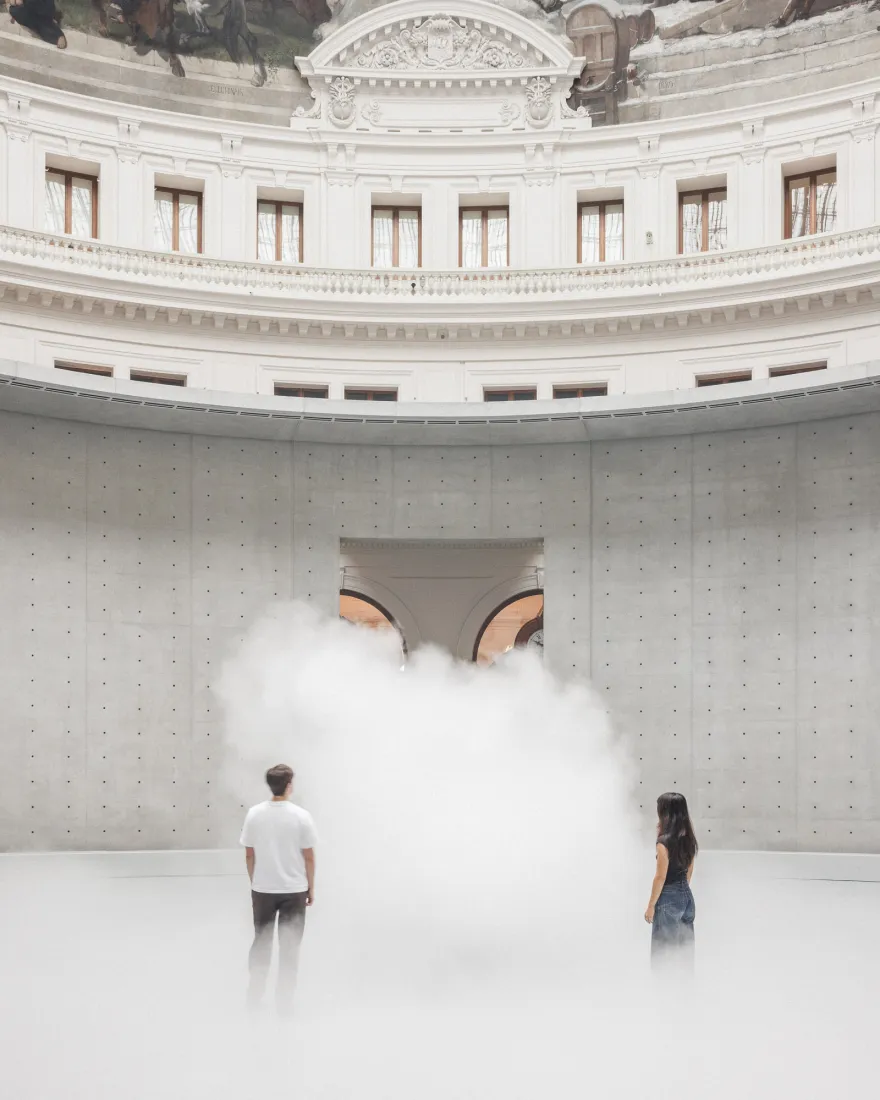
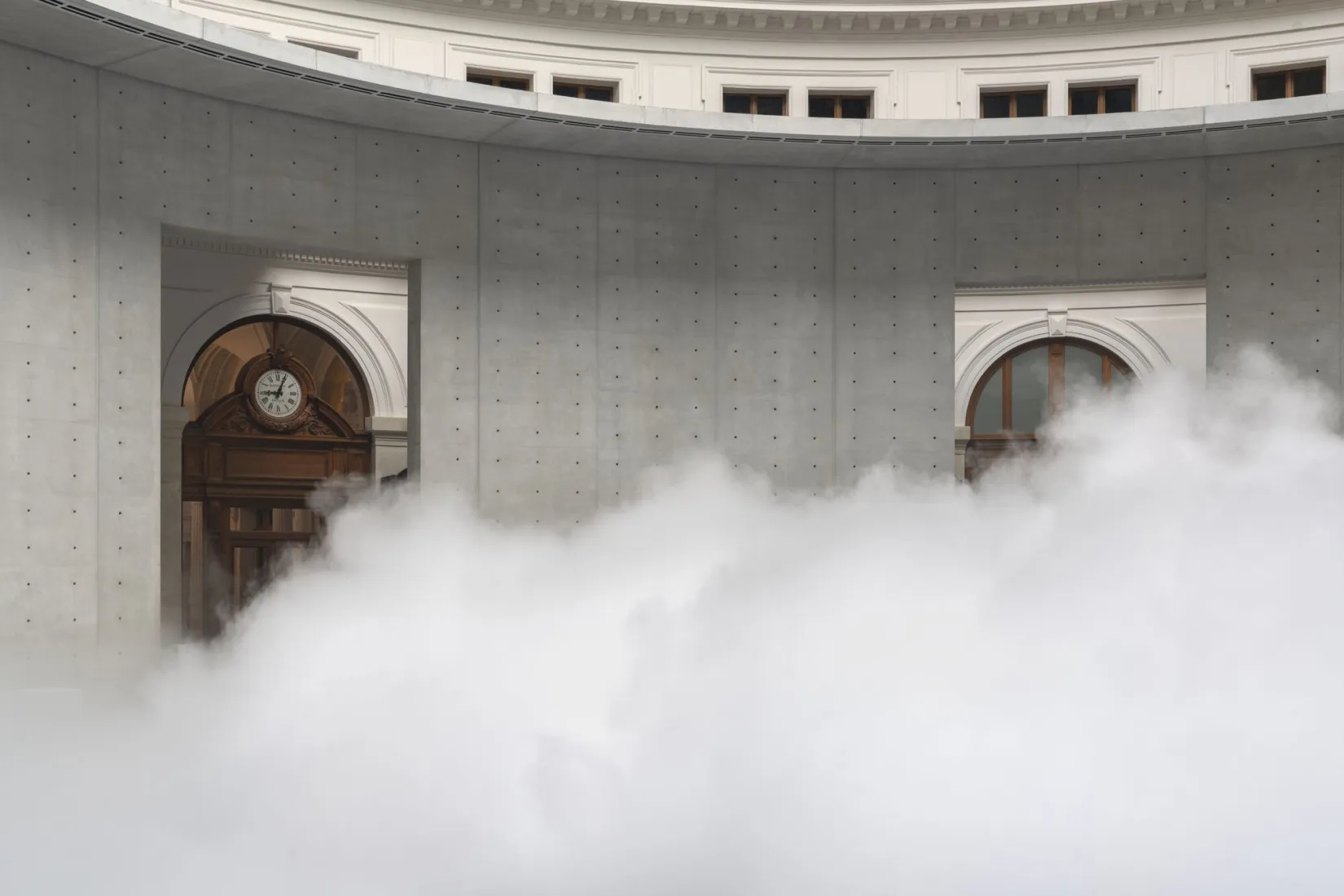
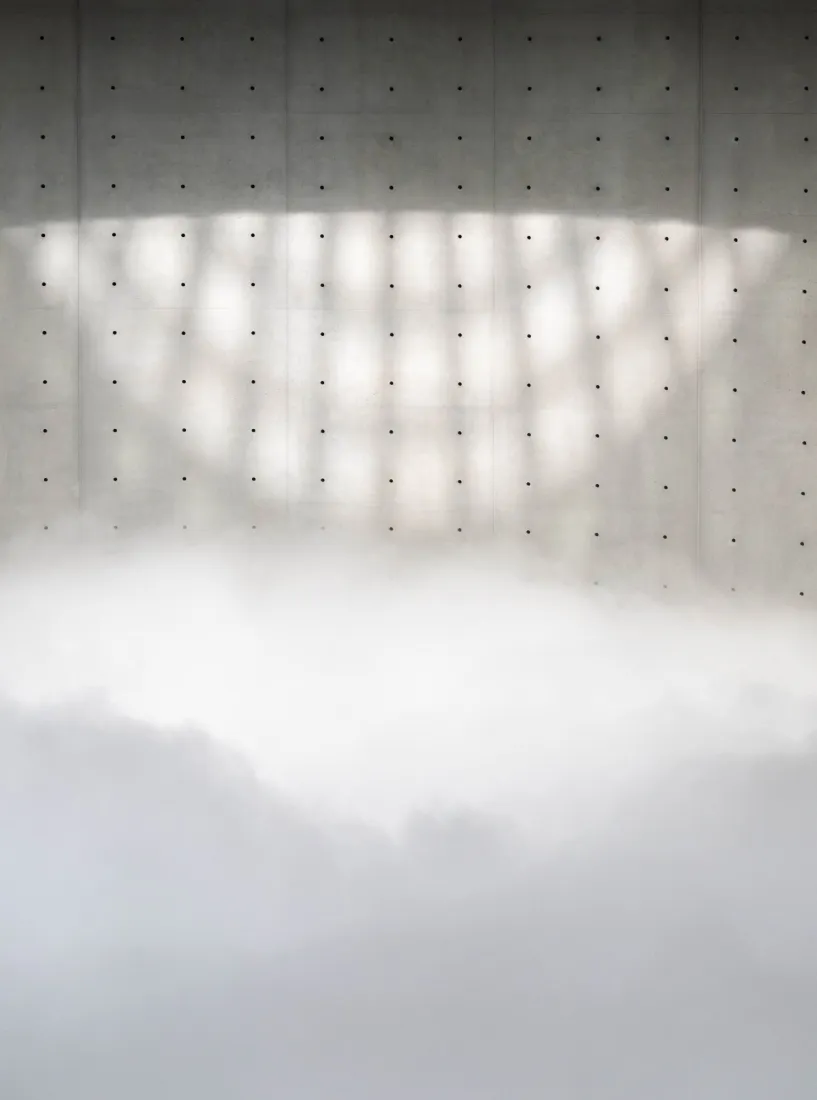
Beneath the museum’s zenithal dome, following the presentation of Camata by Pierre Huyghe, Fujiko Nakaya’s fog sculpture is set within the circular stage of the Rotunda, transforming it into an atmospheric landscape with shifting contours. Visitors appear and disappear in a thick, white fog of water vapour: a Fog Sculpture by the Japanese artist titled Cloud #07156.
With: Frank Bowling / James Lee Byars / Bruce Conner / Trisha Donnelly / Jean Dubuffet / Alberto Giacometti / Robert Gober / Pierre Huyghe / Saodat Ismaïlova / Laura Lamiel / Victor Man / Maria Martins / Jean-Luc Moulène / Fujiko Nakaya / Bruce Nauman / Philippe Parreno / Sigmar Polke / Carol Rama / Germaine Richier / Louis Soutter / Alina Szapocznikow / Yves Tanguy / Wolfgang Tillmans / Rosemarie Trockel / Bill Viola / Danh Vo / Mary Wigman
Curated by : Emma Lavigne, general director and curator, Pinault Collection