The History of Tears

from 7 October 2026
Buy a ticket
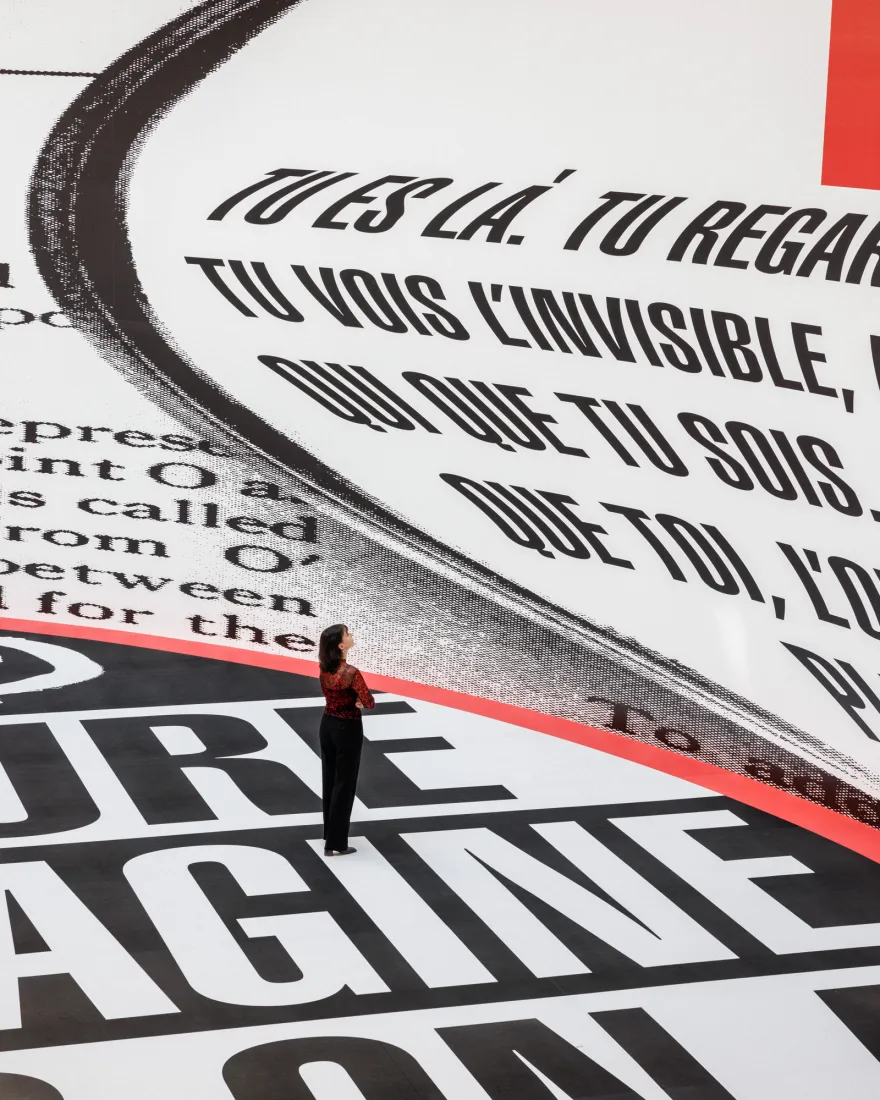
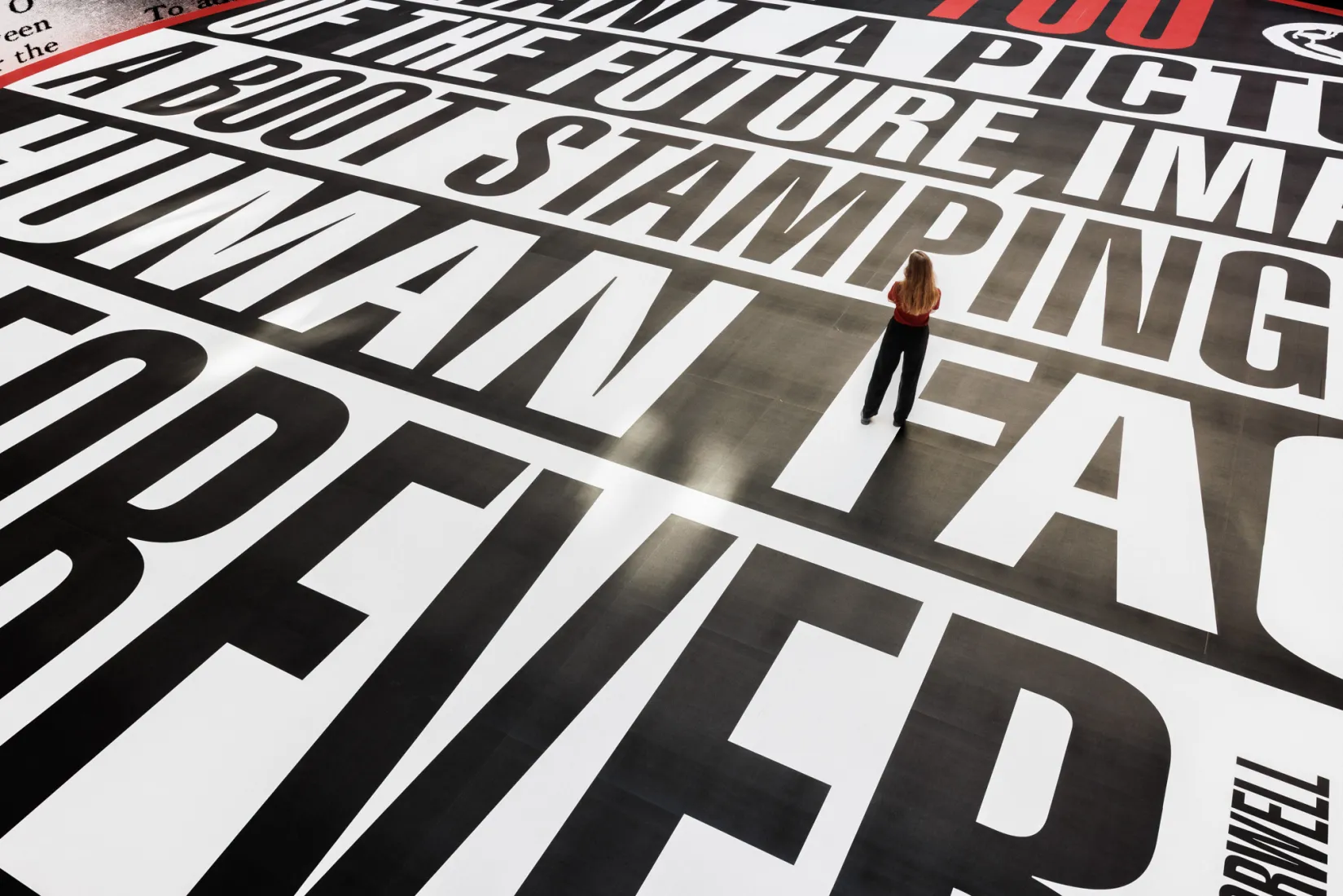
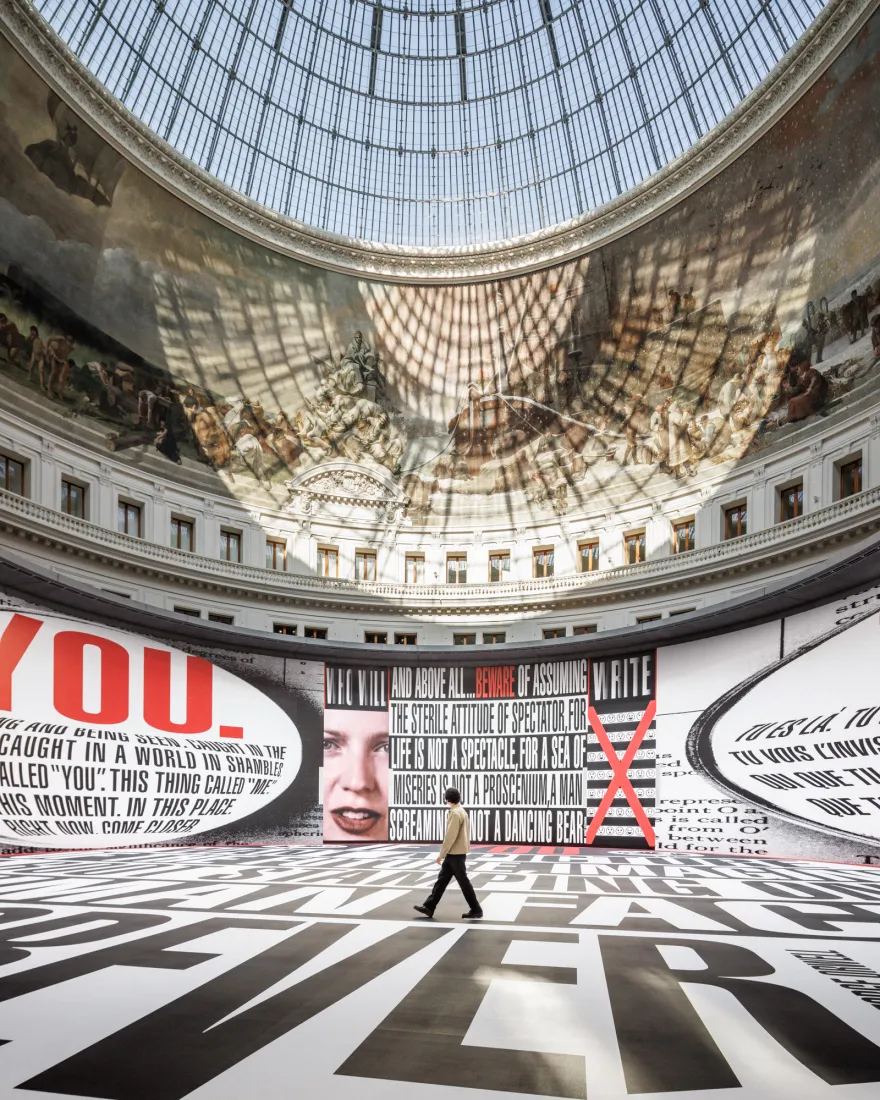
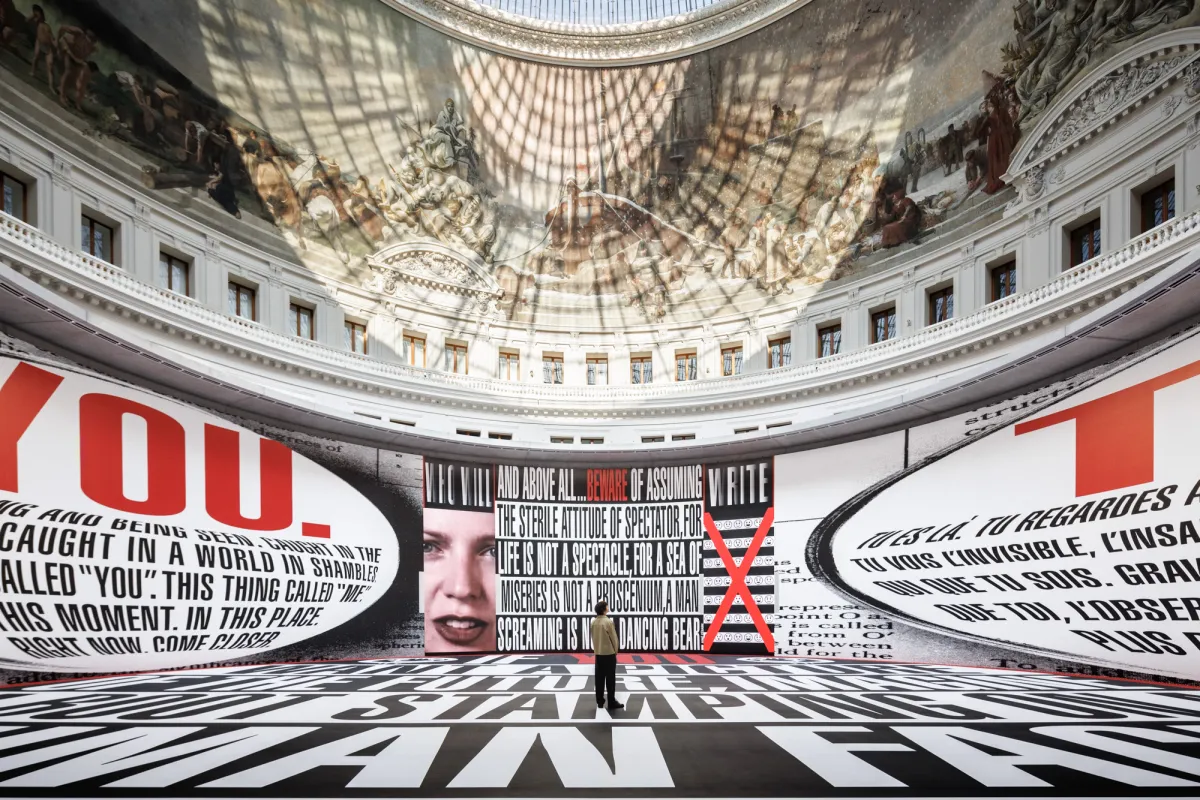
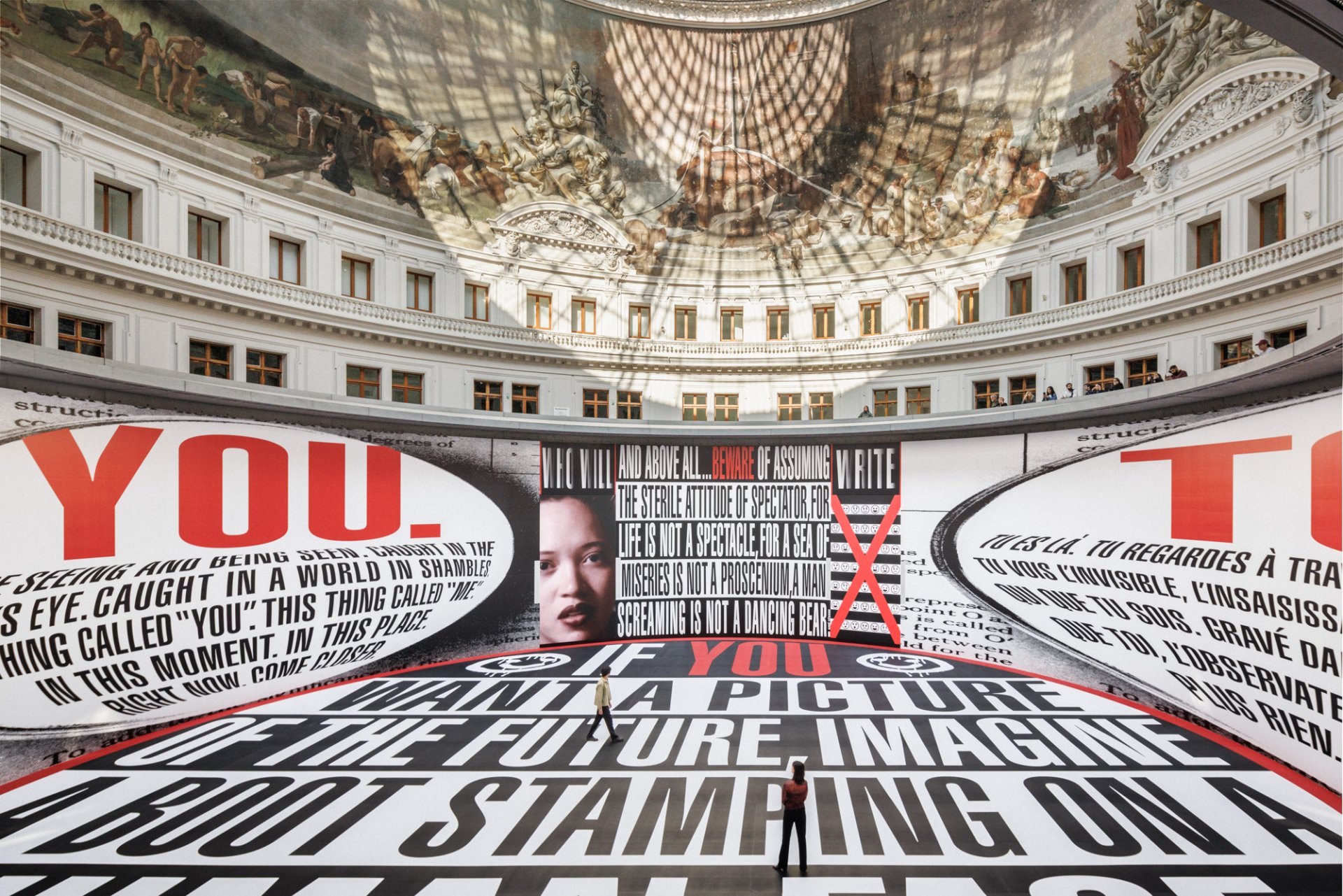
Simulation of Barbara Kruger's installation in the Rotunda of the Bourse de Commerce – Pinault Collection. Courtesy of the artist.

The Pinault Collection presents "The History of Tears", an exhibition by American artist Barbara Kruger, in the Rotunda and Display Cases at the Bourse de Commerce.

Opening hours

Open Monday to Sunday from 11 a.m. to 7 p.m.
Late opening on Fridays until 9 p.m.
Closed on Tuesdays and on May 1st
Free late opening on the first Saturday of every month, from 5 p.m. to 9 p.m.

Purchase a ticket

Full Price : 15€
Ages 18-26 and other reductions : 10€ 
Free entry without booking after 4 p.m. for Super Cercle members
Free, unlimited and priority access with the Membership Card

This ticket also provides access to the “Remember Me” exhibition.
All rates and free admission

Designed specifically for the Museum Rotunda and its surrounding twenty-four Display Cases, Barbara Kruger’s exhibition "The History of Tears" immerses viewers in a constant flow of words, phrases, and messages that take the form of filmed sequences and audio clips.

Tadao Ando’s curved walls at the very heart of the Museum feature epic quotes taken from literary works including George Orwell’s 1984 and Aimé Césaire’s Journal of a Homecoming, while the 24 Display Cases in the Passage have been transformed into lightboxes that flood the space with striking messages penned by this American artist born in 1945. 

Two videos have now been integrated into this new layout. Created and installed by Kruger at the Wexner Center for the Arts in Columbus, Ohio (USA), Power, Pleasure, Desire, Disgust was exhibited for the first time in 1996 before being shown in a variety of settings that nevertheless always involved a textual environment. The works confront the viewer with a succession of faces, gazes, and words that express a combination of desire, domination, fear, and violence. Between verbal saturation and visual immersion, Barbara Kruger has composed a total work of art in which the personal and the political and language and the body collide to form a hypnotic whirlwind, the remarkable resonance of which remains fully relevant today.

“An ongoing deluge of the eyes. A fountain of loss and fear. But also of power, pleasure, desire and disgust. This reservoir can accumulate through domination and conquest, both worldly and domestically. It spurts in moments of global violence and brutality but also amidst the cruelties of intimacy. It can be both triumphalist in a massive sense but also drizzled like petty melodrama strewn with silly cartoons of seduction and rejection. It’s a bodily production that is both remembered and forgotten. It’s a crying body lost amidst the wreckage of the battles for money, land, love and other bodies. To map this emotive fountain, to historicize it, can produce a narrative of profound struggle between the powerful and the disempowered, between the loved and the unloved, between winners and losers. It leaks shame, pride, belief and doubt in ways both intensely threatening and tragically comic. It can show and tell us how we were, how we are and how we will be to one another”.

 — Barbara Kruger
on "The History of Tears"
 

Curated by: Matthieu  Humery, Photography Advisor to the Pinault Collection, with the collaboration of Lola Regard, Research Director


(#9208)

Biography of Barbara Kruger

The thoroughly socially engaged work of Barbara Kruger (b. 1945) grapples with the power of words and images. By “intercepting” advertising messages, she alerts viewers to the alienation in our consumer society and its signs. She also addresses the issues of violence, power, and sexuality. Kruger’s work as a designer in the fields of advertising and fashion gave her great familiarity with the techniques of mass communications. Since the late 1960s, her artistic practice grew alongside the development of gender studies and feminist struggles. Like Cindy Sherman, she subverts the traditional codes of femininity in popular imagery, from film to fashion magazines, in an attempt to deconstruct the dominant discourse underlying them. In 1979, she began presenting work in a style that remains her trademark to this day: photomontages composed of black and white photographs, most often appropriated and enlarged from magazines dating back to the 1940s and 50s, over which she prints slogans in Futura Bold Italic font. 

Check our app!

The online app features audio content to give you a fresh look at the architecture (fr, en, it, de) and the artworks (fr, en).
On your mobile.

Search