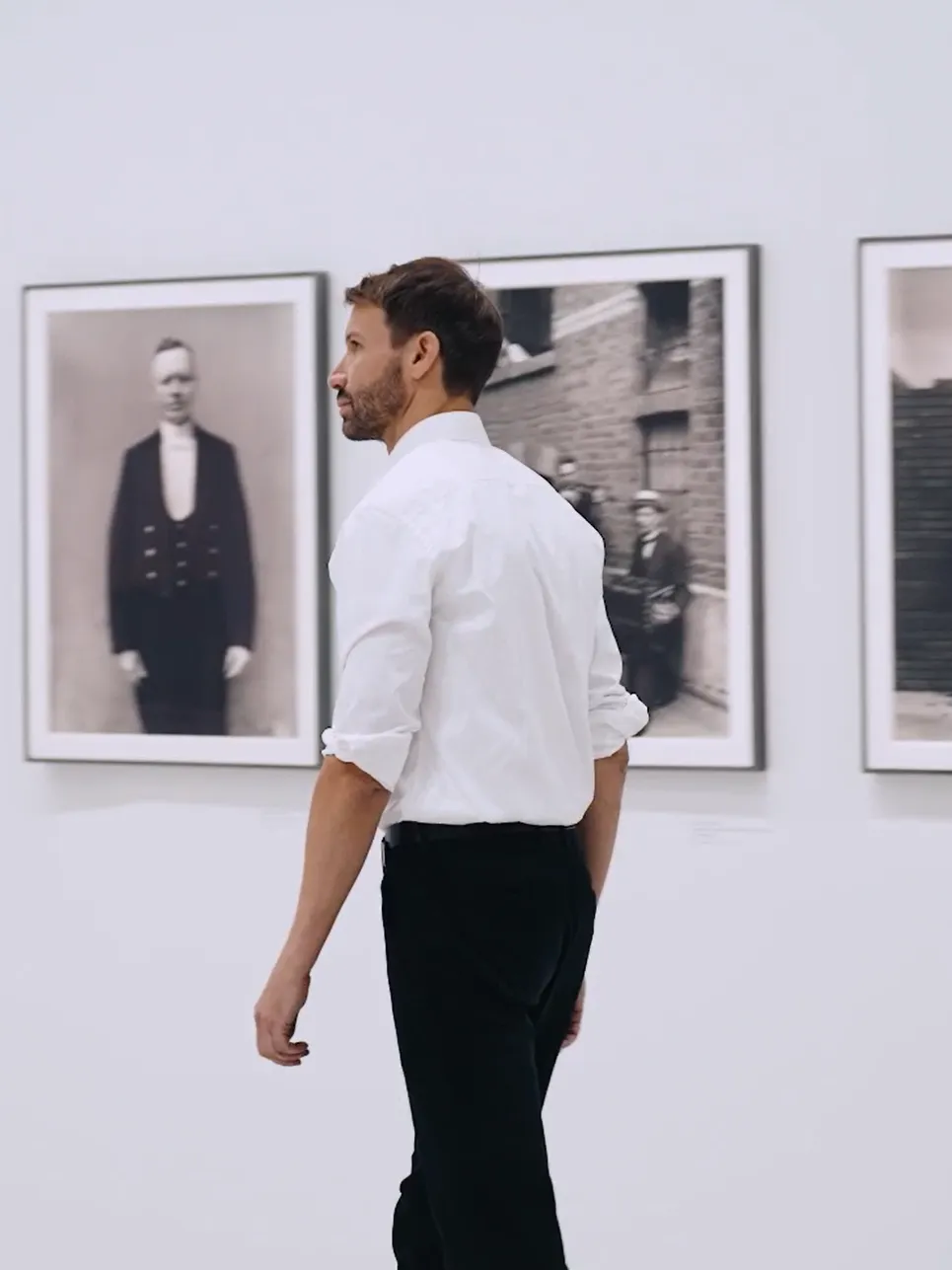
Matthieu Humery
Interview

“At a time when images have become omnipresent, I thought it was important to come back to the materiality of photography”. — Matthieu Humery

The exhibition Remember Me brings together almost two centuries of photography to create a dialogue between eras, genres, and ways of looking at the world. Matthieu Humery, the exhibition’s curator, talks about the choices that guided his vision for this show.

This is the first time that the Pinault Collection is presenting such an extensive selection of photographs at the Bourse de Commerce. What role does photography play in the Collection, and how does the exhibition title "Remember Me" – taken from a work by Barbara Kruger – inform this selection?

A photograph only exists because we look at it. The moment we cease to do so, it loses its purpose. This is the concept underlying this exhibition. Photography plays a very important role in the Pinault Collection, which has a considerable holding of works in this medium. And this is the first time that we are showing such a large group of photographs from the Collection at the Bourse de Commerce.

The works include a photograph by Barbara Kruger made in 1988. This collage, typical of her oeuvre, depicts an eye accompanied by the words “Remember me”. It is a veritable order given to viewers. It demands that they consider how they look at the world and how they perceive images.

When I was looking for a title for this exhibition, I instantly thought of this piece. I felt that this phrase was particularly resonant for this show because it reminds us that a photograph really only exists in the eye of its beholder. It is also a way to emphasise the intimate connection between photography and memory, between traces of the world and their recollection.

“A photograph only exists because we look at it. The moment we cease to do so, it loses its purpose. This is the concept underlying this exhibition”.
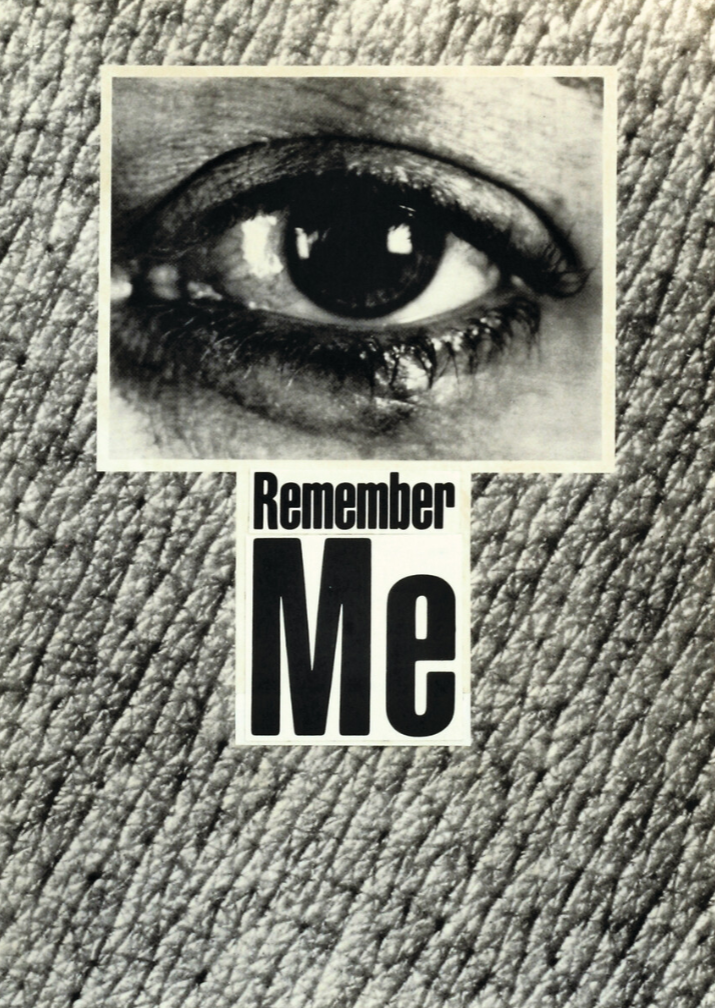
Barbara Kruger, Untitled (Remember me), 1988. © Barbara Kruger. Courtesy Barbara Kruger and Skarstedt

You invited American artist Barbara Kruger to design an installation specifically for the Rotunda. How did you envision this project with her?

Barbara Kruger has a very strong connection to photography. She is constantly combining images and texts in her work. And it is precisely this relationship between word and image that compelled me to ask her to design an installation for the Rotunda.

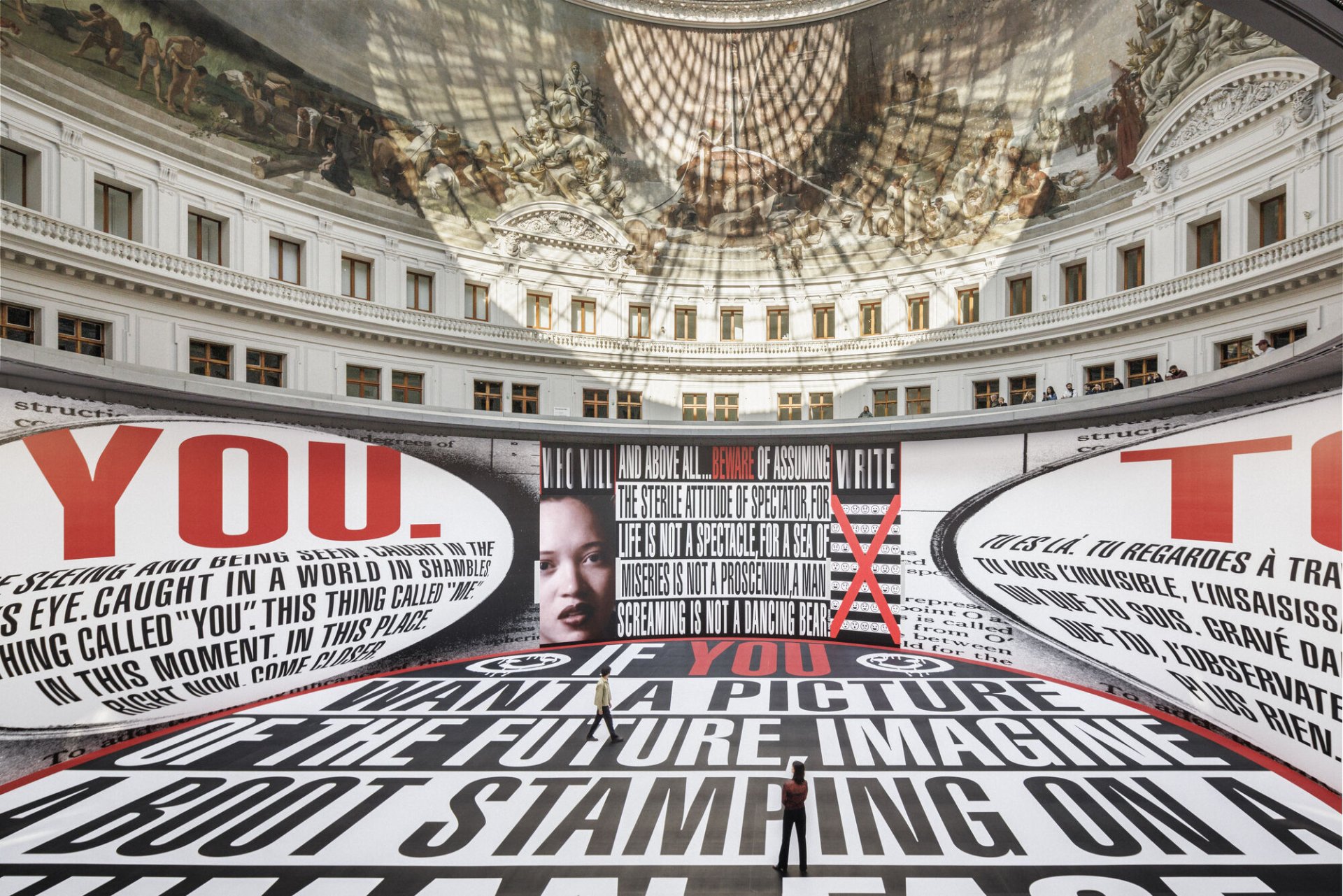
When she came to the Bourse de Commerce, we discovered the architecture of this site together. She responded immediately to the glass dome, which was like a human eye for her – and like the eye of the camera, a photographic lens. She envisioned a series of words to structure the space that would be struck by the natural light of the sky, as if this were a camera obscura. We were won over by this idea instantly, and we developed the project on the basis of this intuition.

View of the exhibition "The History of Tears" by Barbara Kruger, Bourse de Commerce—Pinault Collection, Paris, 2026. © Tadao Ando Architect & Associates, Niney et Marca Architectes, agence Pierre-Antoine Gatier. Courtesy of the artist, Sprüth Magers, and David Zwirner. Photo: Florent Michel.

We then thought about how we could extend this installation to the Display Cases by bringing light into them. This acts as a continuation of the light coming through the glass dome and illuminating this architecture of words.

The choice of texts and authors was also key. Three major literary figures were selected. George Orwell provides a political dimension to the installation and thrusts the viewer into a rather dark vision of the future. Roland Barthes adds a musing on love and its meanings. And, lastly, Aimé Césaire offers something like a reconciliation. His thought offers a different, more luminous view of the future, one that expresses a kind of hope.

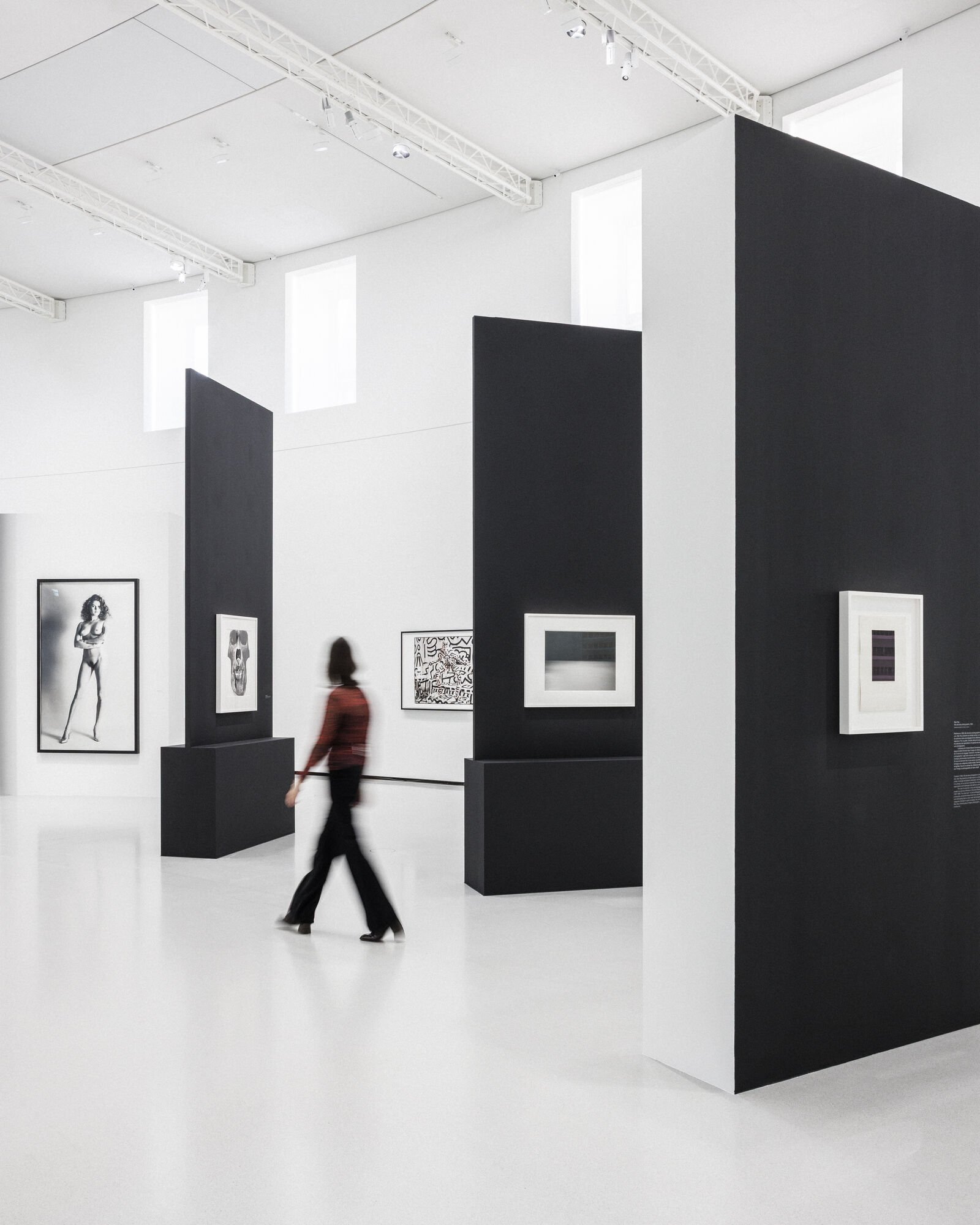
View of the exhibition "Remember Me", Bourse de Commerce—Pinault Collection, Paris, 2026-2027. Photo: Florent Michel / 11h45 / Pinault Collection.
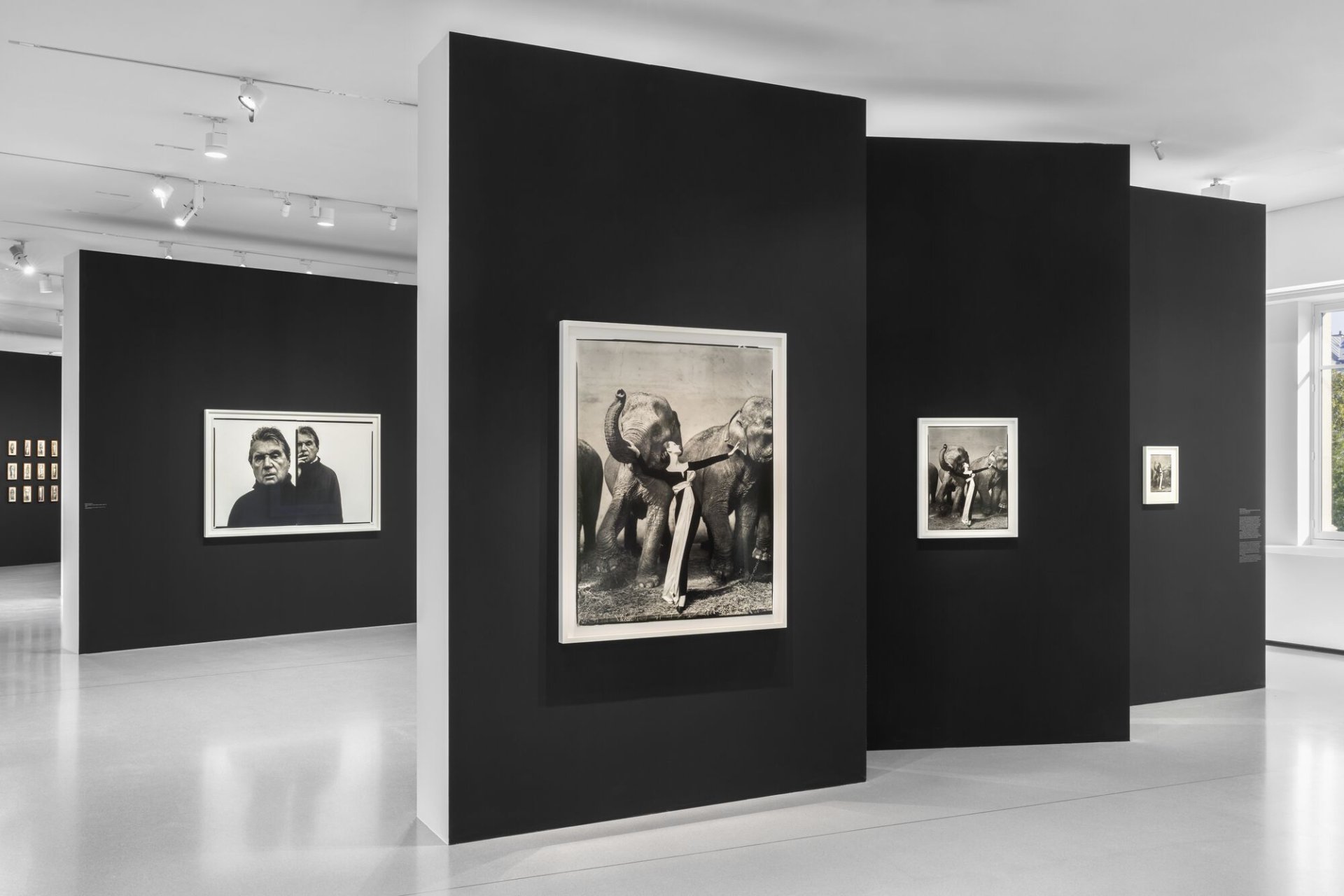

As photography celebrates the bicentenary of its invention this year, you chose a thematic approach over a chronological one. What prompted this decision?

Very early on, I thought that the exhibition should be structured into several thematic sections. Each one features an aspect of the Collection, and it also explores the very meaning of an image. So, the exhibition is organised around different themes, from “By the Sea” to “Seriality and Typology”, “The Fabrication of the Image”, “Face to Face”, “The Body Revealed” and “Disappearance/Abstraction”.

This allowed me to get genres, viewpoints, and eras to talk to one another, without having to follow a chronological order. At a time when photography has become almost totally immaterial and everyone produces images every day, I thought it was important to come back to its materiality, to the photograph as an object.

What I want to offer visitors is the sensory experience of looking at the works, grasping their physical presence, and discovering a large array of images, a kind of visual fugue that runs through and explores two hundred years of photography.

View of the exhibition "Remember Me", Bourse de Commerce—Pinault Collection, Paris, 2026. © Tadao Ando Architect & Associates, Niney et Marca Architectes, agence Pierre-Antoine Gatier. Photo: Nicolas Brasseur.

Throughout the different chapters of the exhibition, from “The Fabrication of the Image” to “The Art of Composition”, you lead the visitor into the photographer’s studio.

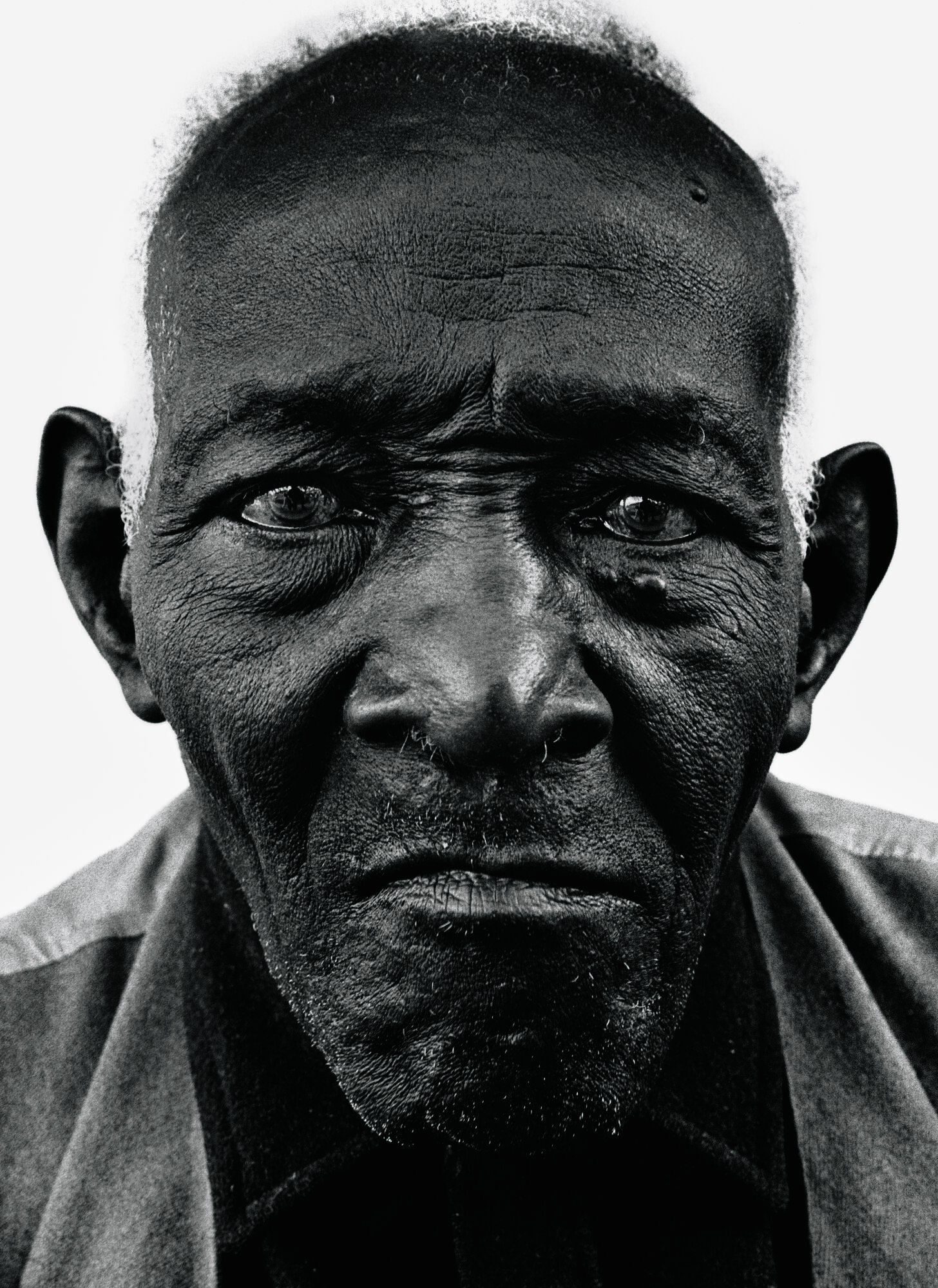
In the section “The Fabrication of the Image”, I thought it would be particularly interesting to present Richard Avedon’s portrait of William Casby, three copies of which are shown here. It’s the same photograph each time, but they are different photographic objects. Casby was the last American born into slavery in the United States. The exhibition features the uncropped, original print, which reveals the first version of this image. Avedon then decided to enlarge and crop it when he printed for a second time. This changes our perception of the portrait completely. He then printed it a third time, even bigger, but with the same cropping. Here as well, our sense of the image changes as a result.

Because these three prints belong to the Collection, I thought it would be interesting to show them together, rather than to choose just one of them. This shows viewers that, even when looking at the same image, the size, cropping, and physical quality of the print can profoundly transform their perception of this image.

Richard Avedon, William Casby, Born in Slavery, Algiers, Louisiana, March 24, 1963. © The Richard Avedon Foundation.

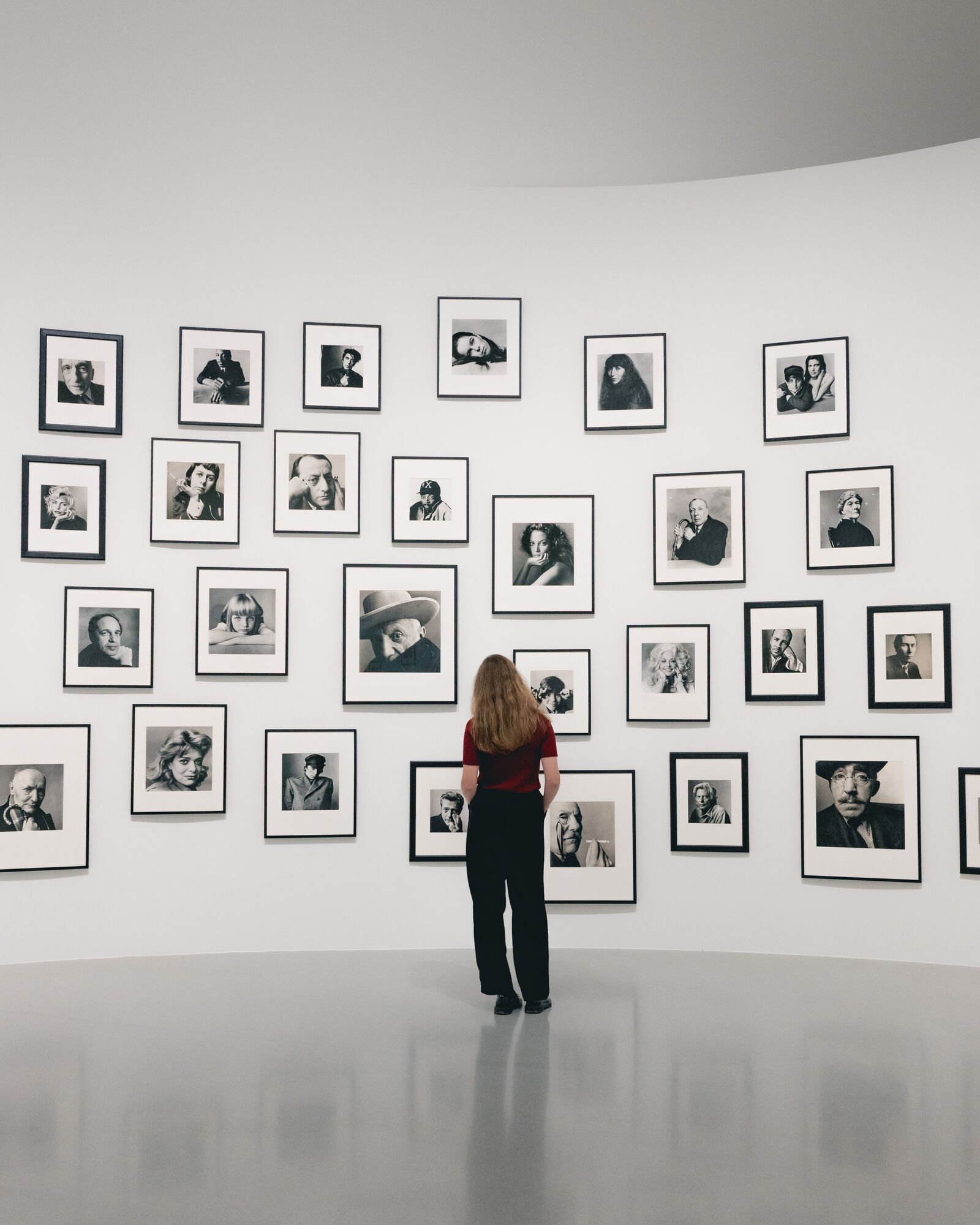
We have included other portraits by Richard Avedon in the exhibition. These carefully composed images testify to the great attention he paid to his often long portrait sessions, and to the printing, as he himself also printed them.

These portraits have been hung alongside each other on the same wall, inviting viewers to move freely from one image to the other. This process helps us grasp the depth of his work and the various stages of his creative process more fully.

You have devoted two spaces to major photographers, Irving Penn and Raymond Depardon, one American, and the other, French. Why did you decide to feature them in this way, and what do you hope to reveal about their respective ways of looking at the world?

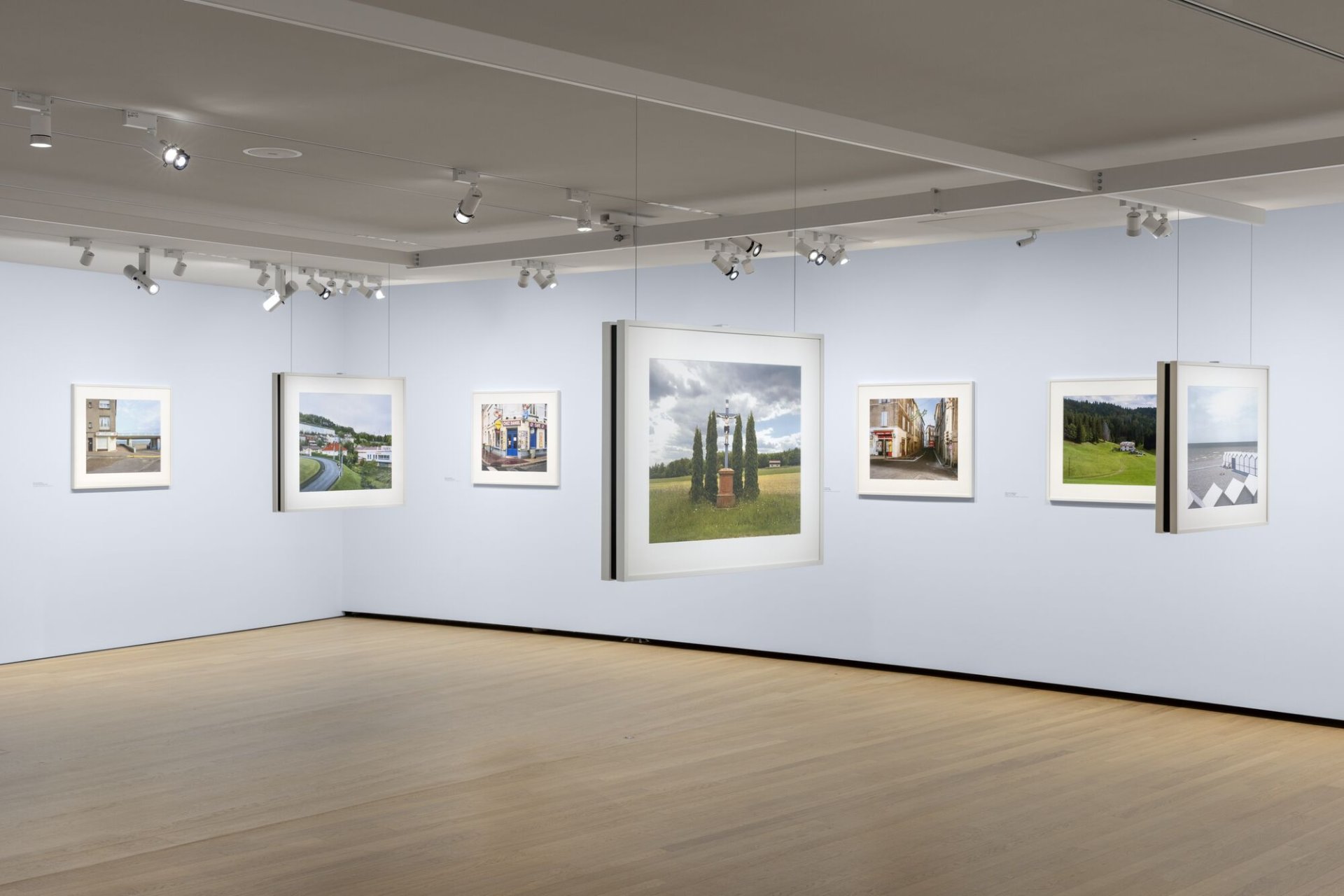
For Raymond Depardon, I decided to show mainly landscapes. He criss-crossed France in his camper van, looking for an in-between France in these areas that are barely considered. He himself talks about “provincial, small-town France”. I thought it would be interesting to exhibit this carefully made body of photographs, which focuses on landscapes, but which is also very much a portrait of France and of the French.

View of the exhibition "Raymond Depardon. France", Bourse de Commerce—Pinault Collection, Paris, 2026-2027. © Tadao Ando Architect & Associates, Niney et Marca Architectes, agence Pierre-Antoine Gatier. © Raymond Depardon. Photo: Nicolas Brasseur.

You see a few people in some of the photographs, but most of them do not include a single person. They depict deserted streets, roundabouts, schools, and garages. Unlike Irving Penn’s photographs, which are all hung on the wall, Raymond Depardon’s float in the space. This creates a dialogue between the images and helps viewers grasp the consistency of his work.

I found that Irving Penn’s and Raymond Depardon’s work conversed well with each other. On the one hand, we have mainly portraits in black and white, and on the other, landscapes in colour. Both are major figures in photography, and both are highly technically skilled, but their image-making visions and practices are very different. It was specifically this dialogue between their two approaches that interested me.

View of the exhibition "The World According to Penn", Bourse de Commerce—Pinault Collection, Paris, 2026-2027. © Tadao Ando Architect & Associates, Niney et Marca Architectes, agence Pierre-Antoine Gatier. © Irving Penn. Photo: Mickaël Llorca

The exhibition concludes with Man Ray’s Ma dernière photographie, a work that paradoxically is not even a photograph. Why did you choose this image?

We only exist because we remember. The exhibition title, Remember Me, already contains this concept of memory and disappearance. I wanted to play with this idea throughout the exhibition by creating a progression from very figurative representations of the body to something more abstract, verging on the image’s disappearance.

That’s why I decided to present Man Ray’s Ma dernière photographie (“My last photograph”). And it’s not even a photograph; it’s a gouache on cardboard that he made in 1929. I found this work to be particularly striking in the context of this exhibition, because it talks about photography without itself being one. In a way, Man Ray anticipated an almost philosophical line of reasoning about images and their immateriality.

This piece also connects to the rest of the Collection, in which François Pinault reveals his great interest in abstraction and minimalism. So, I thought it was appropriate to bring these two aspects together and conclude the exhibition with this magnificent piece.

he exhibition "Remember Me" runs until 18 January 2027 at the Bourse de Commerce – Pinault Collection in Paris.

Search