"I have been interested in thinking about a more expanded understanding of the minimalist movement" — Jessica Morgan
Jessica Morgan, curator of the exhibition "Minimal", discusses her encounter with the Pinault Collection and how it brings together major artists and lesser-known voices to reveal the richness and diversity of minimalism.
What is the starting point of the "Minimal" exhibition?
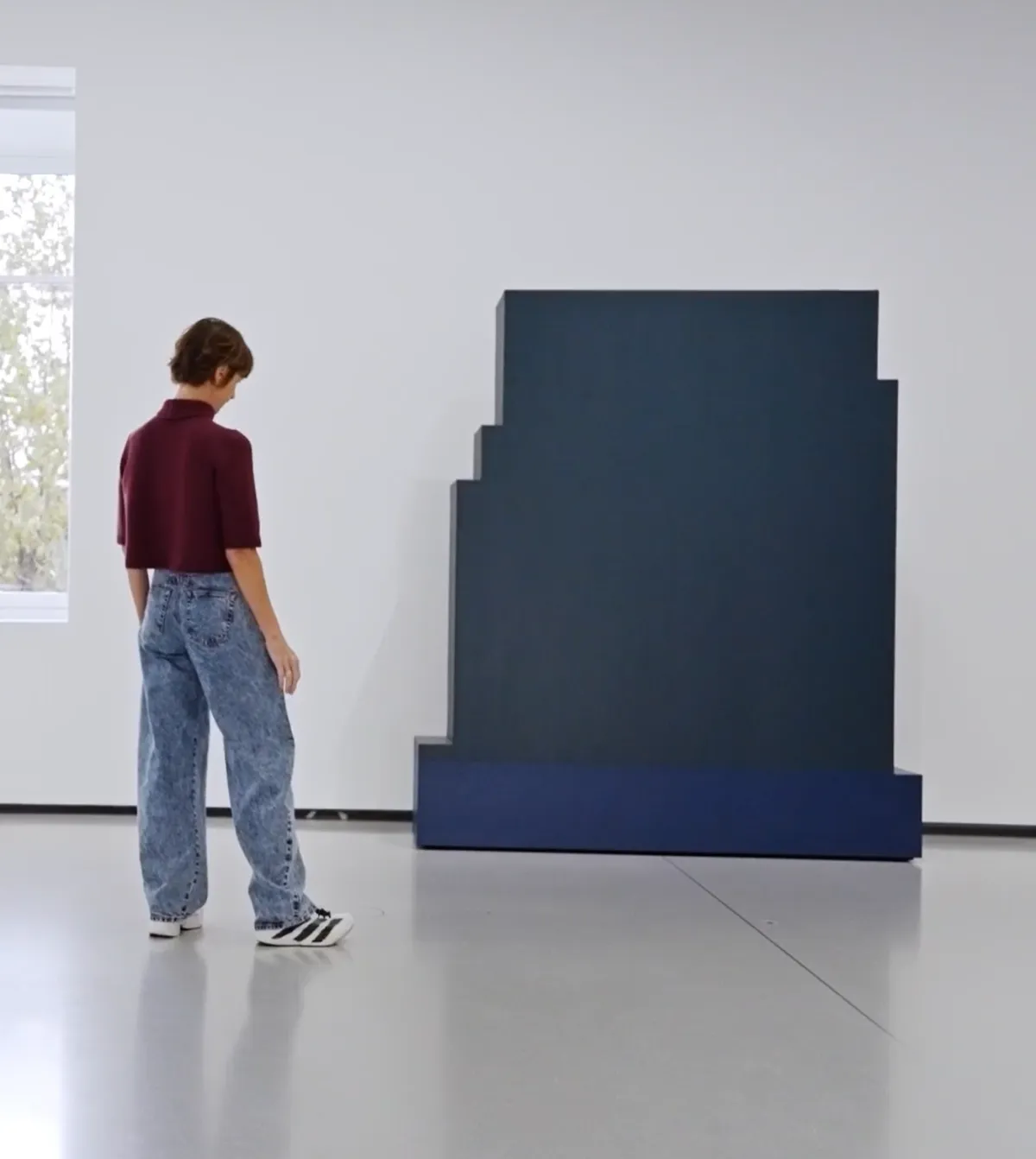
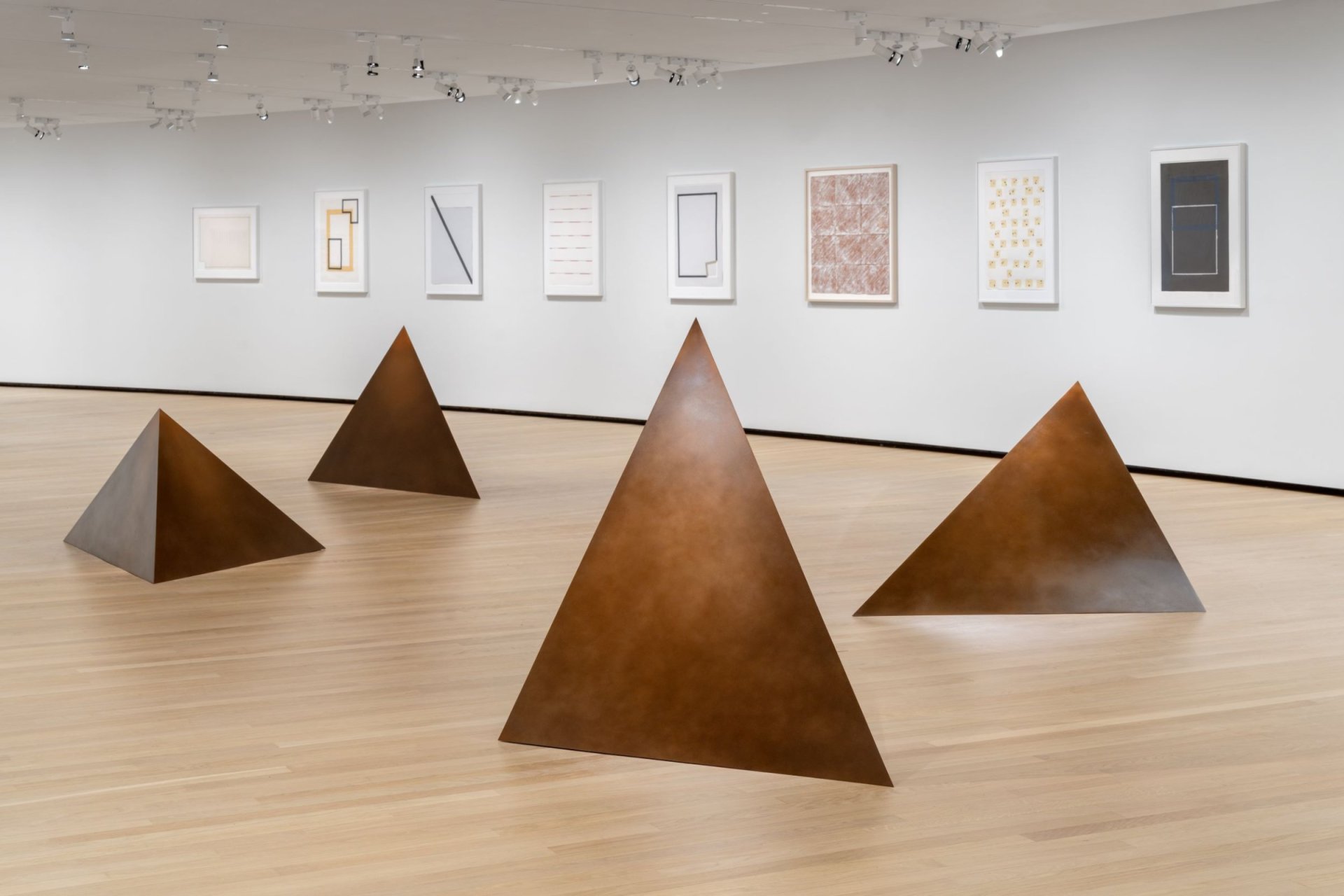
The word “minimal” can be interpreted in so many ways, and that was really what interested me with the exhibition at the Bourse de Commerce. There is a core group of artists we might identify with a capital “M” Minimalism. These artists form a smaller group, often associated with the Northeast of America. However, I have been interested in thinking about a more expanded understanding of the minimalist movement, one that includes different regions, various geographies, and even slightly different generations as well.
It was actually a great discovery to had realized that there were so many artists of a minimal persuasion in the collection of François Pinault. I was perhaps more familiar with the figurative and the more contemporary works. My starting point for the exhibition was to delve deep into the work that was present and to think about how we could tell this more expanded narrative around minimal art. I was thrilled to see that there were extraordinary holdings of works by the Mono-ha Group, the Japanese group associated with a minimal language in Japan in the 1960s and 1970s. But indeed, there were many other works from different regions, both from Europe and the US, where we could begin to tell a story about this really global conversation at that time.
"My starting point for the exhibition was to delve deep into the work that was present and to think about how we could tell this more expanded narrative around minimal art."
Why did you choose to structure the exhibition around seven themes?
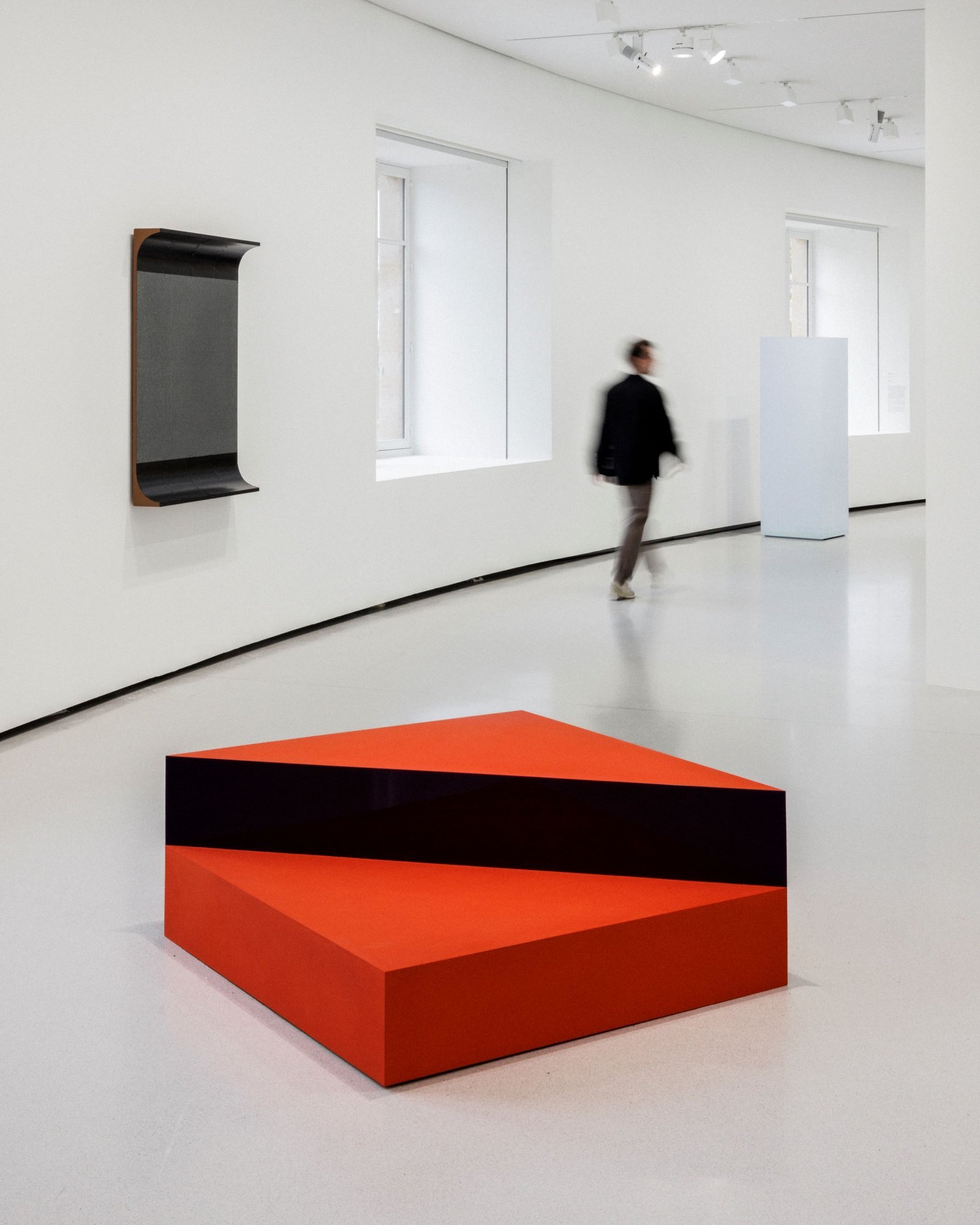
It seemed very important not to flatten the artists who were present. What happened in Rio de Janeiro, Tokyo, London, Paris, New York, or Los Angeles were very different movements. The artists emerged from different political and material conditions. I didn't want to come up with thematics that I felt would somehow reduce the specificity of their work. It became really quite natural to think about how to bring the artists together, whether with a reevaluation of the grid - a theme in art history for decades, if not centuries - but one which was really critically evaluated by these artists in the '60s and '70s, whether they were in Europe, US, or Latin America. We followed the same approach for “Surface”, a section looking at the confusion between painting and sculpture. Here, you will find a sculpture that is painted as if it were a painterly form, or a painting that is presented almost as a sculpture on the wall.
Certains artists, such as Meg Webster, On Kawara, Agnes Martin, and Charlotte Posenenske, occupy a special place in the exhibition. What is your curatorial approach?
The Rotunda of the Bourse de Commerce is the most important moment of entry into the museum. The statement that set there is the mood for the whole journey through the museum. It was important to me to choose an artist who was emblematic of this global minimalist movement in art history. At the same time, I wanted someone who could offer something new and perhaps surprise our visitors. Meg Webster is an artist that we've worked with extensively at Dia Art Foundation, the museum that I run. And I find her work so particularly compelling because she's using these geometric and reduced forms but making the work entirely out of natural material. So instead of the steel, concrete, the type of materials that we've traditionally associated with minimal art, Meg Webster’s work is made from earth, soil, plants, flowers, berries, and really questions our understanding of the materiality of this minimal work.
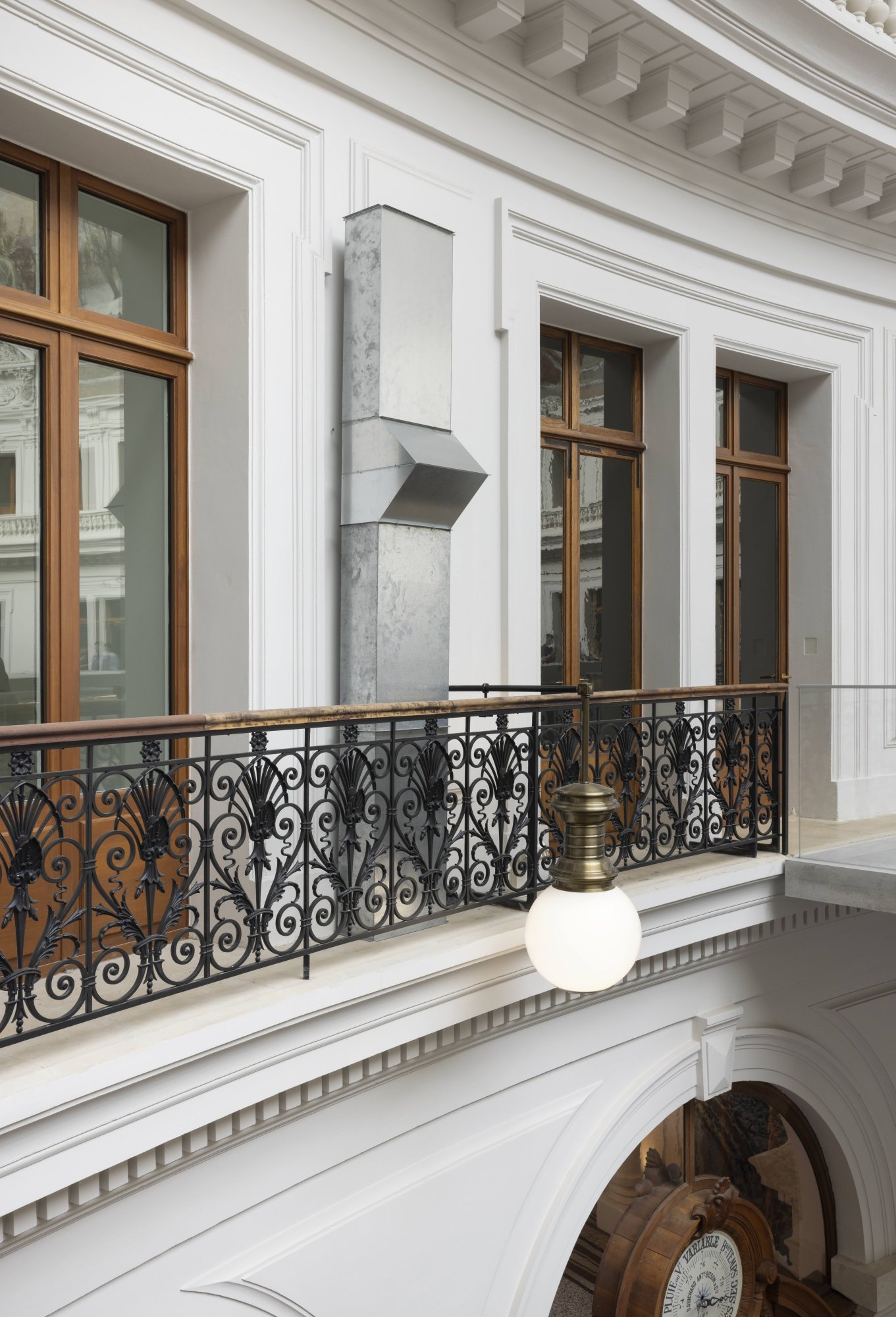
Within the Pinault Collection, there is incredible depth in the representation of certain artists, such as Robert Ryman, Agnes Martin, and On Kawara, who are clearly important to François Pinault. It was a pleasure to consider how we could bring together groups of these works and explore their language and methodology in greater depth. Charlotte Posenenske, a German minimal artist known for her innovative modular sculptures, is an artist we've worked with extensively at Dia Art Foundation. Her work appears throughout the building, intersecting with the architecture. It may surprise people in different spots or even go completely unnoticed, as it deliberately echoes the infrastructure we are used to seeing in modernized buildings. Her language, in the case of the DW series that we're showing, are metal tubes of different configurations. The wonderful thing about Charlotte Posenenske’s works is that the curator or collector is at liberty to form them in whichever way they want. We’ve combined different structures that can be assembled together and integrated them into the architecture of the Bourse—an extraordinary building, remarkable not only for its historic presence but also for Tadao Ando’s renovation.
The exhibition brings together historical figures of minimal art as well as less expected artists. What guided the selection?
Following the work carried out at Dia in recent years, I was keenly aware that the ’60s and ’70s, and the global minimal movement, were far richer than the history that had been told to us. There are major figures such as Dan Flavin and Donald Judd featured in the exhibition, but there are also other voices joining them.
Meg Webster is one of these. In fact, Donald Judd was a great supporter of Meg Webster's work. I gave her her first exhibition at Dia. But we see other figures like Howardena Pindell, a fascinating painter from New York. She worked at the Museum of Modern Art, right in the center of the picture of the conversation of what was happening in the art world at this time in the 1960s and 1970s in New York. Yet, she was not integrated into the Minimalist movement. Her work appears both in the “Grid” and the “Monochrome” sections as she explores this non-traditional painterly practice, introducing different types of matter and material into her paint surfaces. Another artist, perhaps lesser known, is Rasheed Araeen. He was born in Pakistan but spent much of his career in London. From the mid-1960s, he became an important minimal voice in the London art scene. His work also expresses something a little unusual. One remarkable piece, From Zero to Infinity, included in the exhibition, invites interaction and challenges the notion of a finished artwork. It is a work in progress, something we can engage with and transform ourselves.
"I was keenly aware that the ’60s and ’70s, and the global minimal movement, were far richer than the history that had been told to us."
How is the Japanese Mono-ha movement integrated into the exhibition?
The Mono-ha movement was particularly important in this exhibition, partly because François Pinault has such an extensive collection of works by Mono-ha artists such as Kishio Suga and Susumu Koshimizu. The extent of the representation of these artists is really impressive, and it felt very important to me to give them a specific dedicated space. I was aware that these artists might be less familiar to audiences in France, as there has not been a major exhibition of their work here. Yet they are not only in dialogue through materials, approaches, and aesthetics; there is also a rich history of these artists exhibiting in Paris. The 1971 Paris Biennale was a pivotal moment when many of them came, showed their work, and forged friendships and associations with artists in Europe and the United States. There's a real history and dialog between these generations of artists.
How does the circular architecture of the Bourse de Commerce resonate with the minimalist works it hosts?
The building is always the starting point for any exhibition here. It's not only round, but it also has very particular historic features. I was very interested in the idea of opening the windows, which look either inwards or outwards on the second floor of the Bourse. In conceiving the exhibition and how it would be experienced, natural light, a sense of opacity, and a connection to the city were essential, especially in relation to the way the works create a kind of choreography within the space.
In your view, how does minimalism resonate with the contemporary moment? What kind of experience do you wish to offer visitors?
I think, fundamentally, some of the key concerns remain as relevant today as they were then. One in particular is the idea of focused viewing. Many of these artists invite us to slow down, to take time to observe subtle—sometimes even minute—details. Robert Ryman’s work, for example, truly demands careful, attentive looking. I would love for visitors to take away this very direct dialog with us, with our bodies, with our sensibilities. In the case of Meg Webster, there's a deeply sensorial experience to be had. And for other artists, it is more a matter of confronting the artwork. When we encounter something like Lee Ufan’s sculptural piece—a rock placed on a sheet of glass—we become acutely aware of the action that created it. It calls on our sensitivity, our understanding of weight, gravity, and the fragility of glass. There is something profoundly empathetic in this gesture, as if the artist is asking us to truly grasp and experience these forces. In the “Materialism” section, Michelle Stuart’s canvases bear traces of earth rubbed into their surfaces. This serves as a reminder of the physicality of matter—materials we encounter daily— now transformed into art.
The exhibition ‘Minimal’ is on display until 19 January 2025 at the Bourse de Commerce – Pinault Collection in Paris.