Michael Armitage. The Promise of Change
Palazzo Grassi
From 29 March 2026 to 10 January 2027
Curated by Jean-Marie Gallais, curator, Pinault Collection, in collaboration with Hans-Ulrich Obrist, art director, Serpentine Galleries, for the catalogue, and Caroline Bourgeois, advisor, Pinault Collection, and Michelle Mlati, art historian
Pinault Collection presents a major exhibition dedicated to Michael Armitage, one of the most original and acclaimed voices in contemporary painting. Navigating between narratives inspired by reality and dreamlike visions, the work of Michael Armitage (born in Nairobi in 1984) addresses issues of our time, including sociopolitical tensions, violence, alluring ideologies, and the global migration crisis. His paintings open with sensitivity and critical acuity to a broader reflection on identity, memory, and the meaning of humanity.
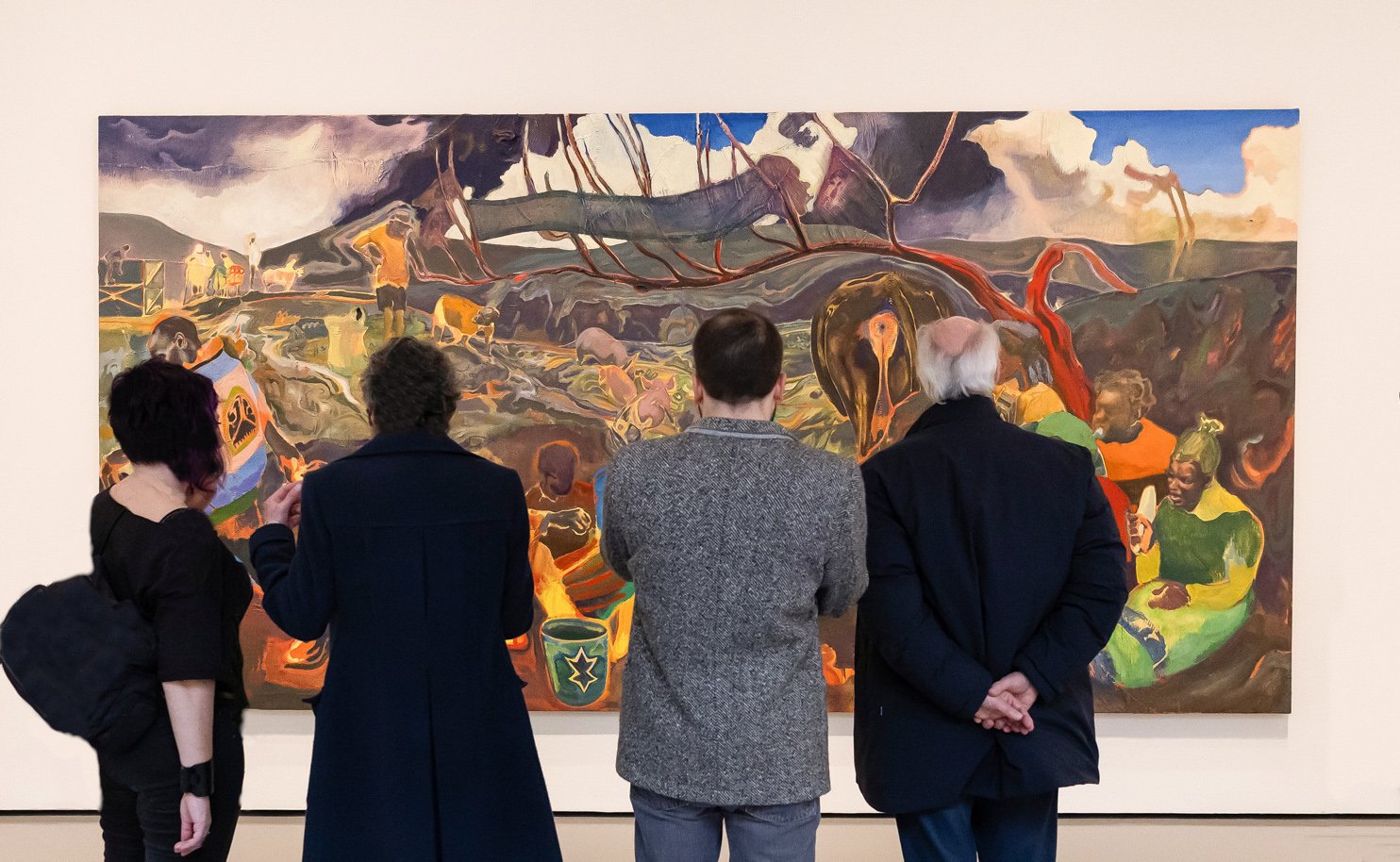
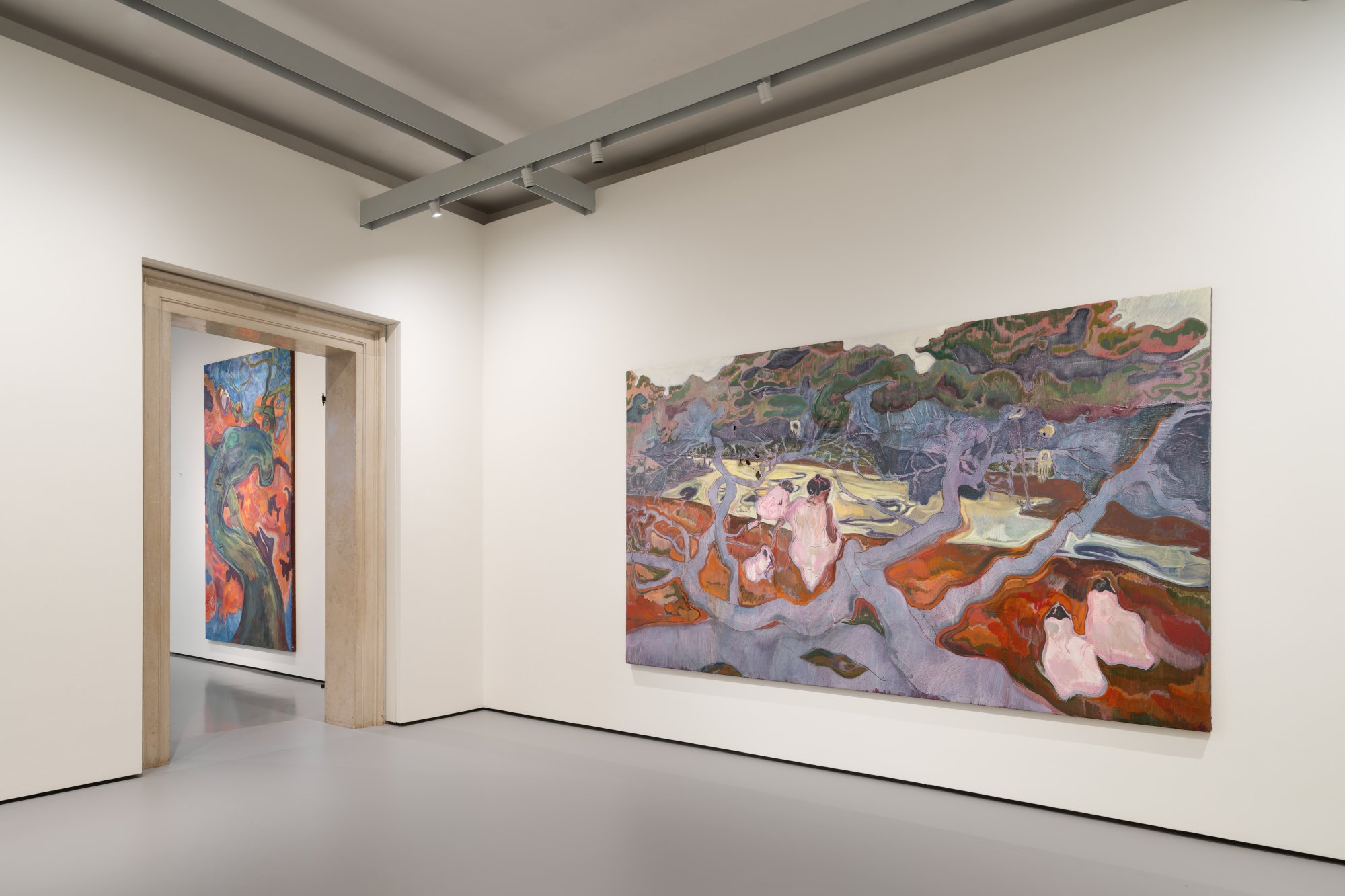
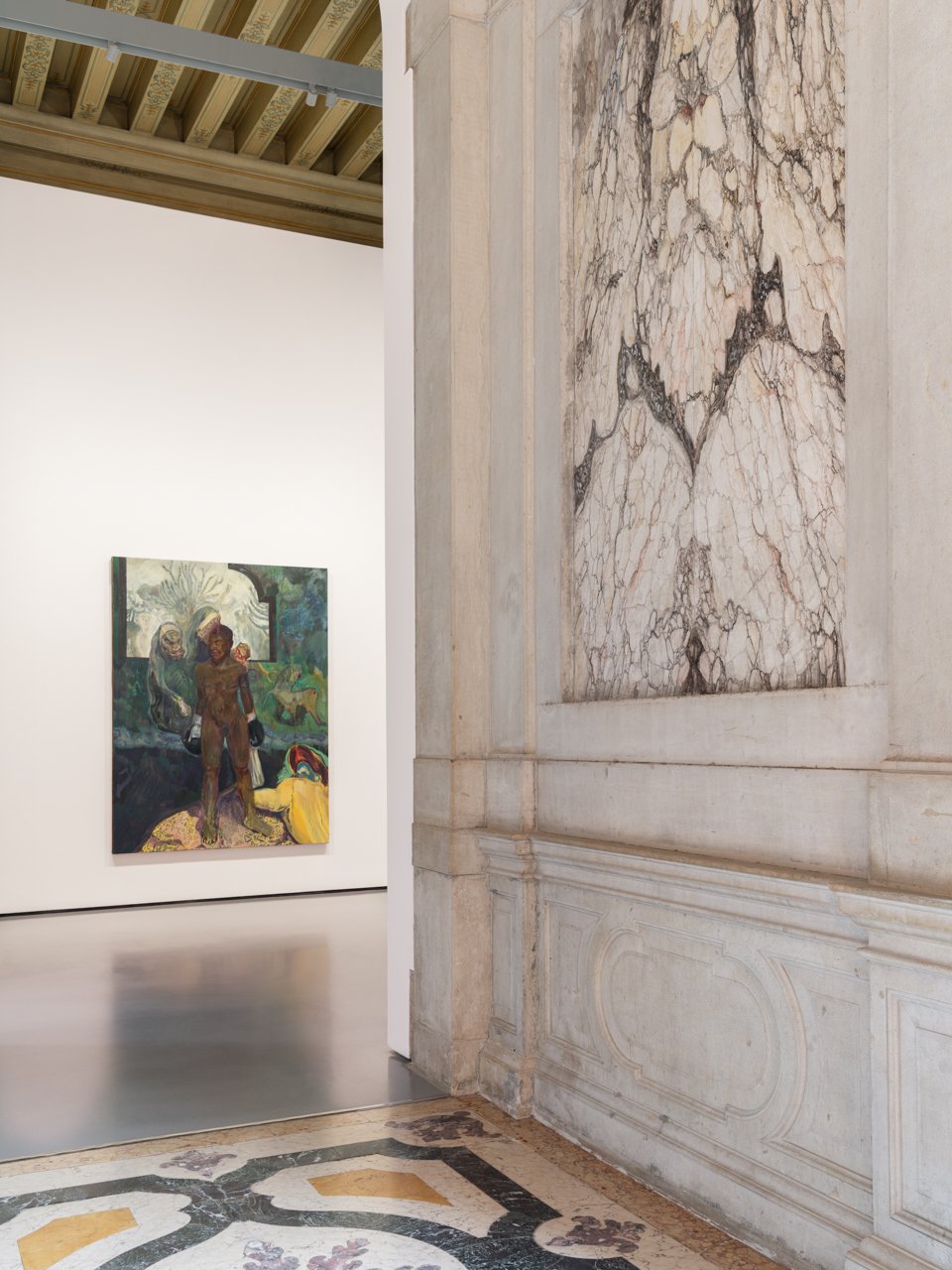
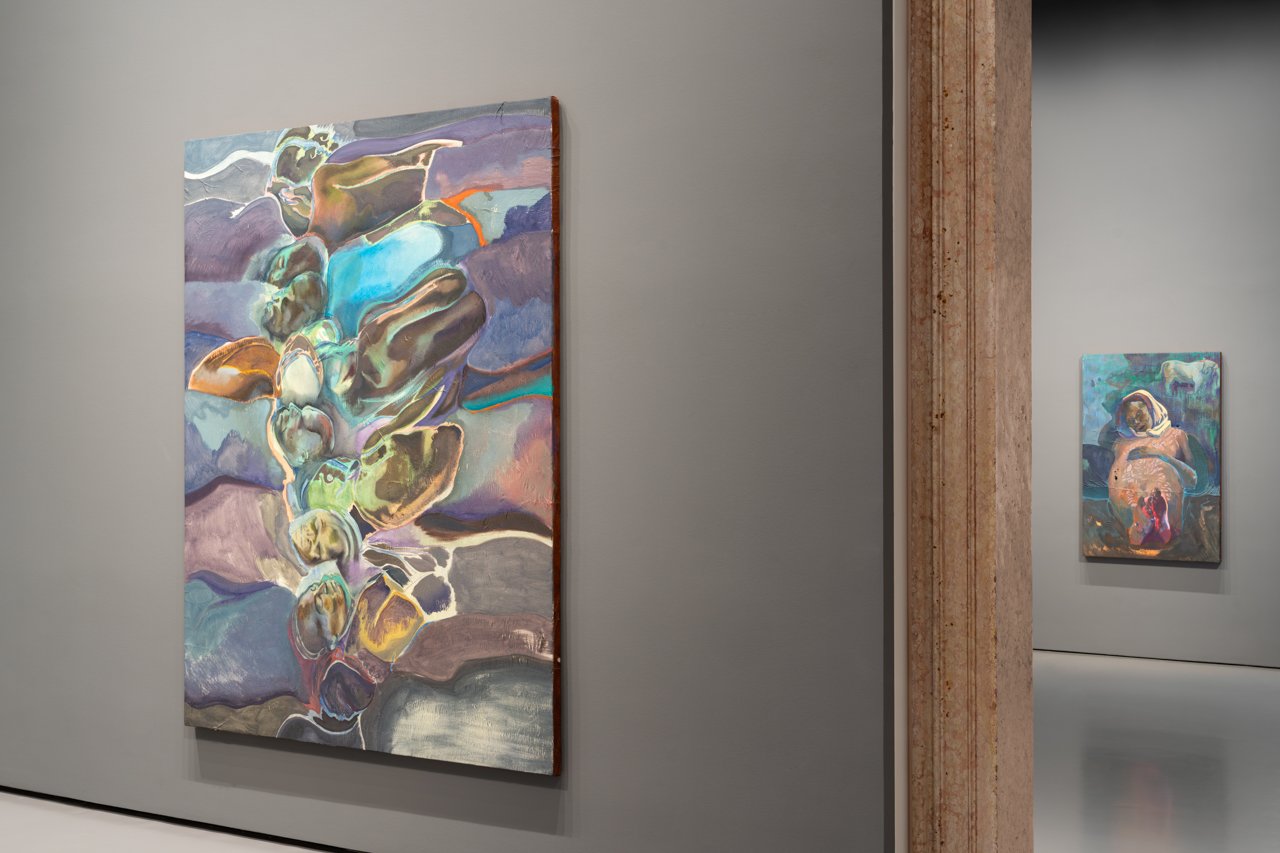
Kenyan-British artist Michael Armitage presents at the Palazzo Grassi a selection of forty-five paintings, including newly created pieces, and over one hundred studies that reveal his dense and vibrant pictorial language, staging figures in rich compositions with remarkable chromatic intensity, at the crossroads of several aesthetic canons. His choice of subject matter and interpretive undertones share the same expressive power. The painter does not shy away from violent and harsh themes, believing that art cannot ignore reality but must instead grapple with it: the consequences of war, corruption and instability in equatorial regions, the migration crisis, the weight of societal judgment, and abuses of power form the backdrop of some of his poignant works.
Based between Kenya and Indonesia, Armitage draws inspiration from a wide range of sources: historical and contemporary news, political demonstrations, literature, cinema, local rituals, colonial and modern architecture, flora and fauna, and global art history. At the heart of his iconography is East Africa, and Kenya in particular, which he explores with both critical, satirical insight and visionary depth. While some scenes are precisely located or situated in time, notably when the artist followed a team of journalists covering the opposition movements and their violent repression during the 2017 elections in Kenya, or when he depicts incidents related to the 2020-21 lockdown, others remain more elusive and universal. This ambiguity leads Armitage into fluid territories.
The exhibition, spread across two levels of the Palazzo Grassi, gradually delves deeper into this exploration of inhabited landscapes and visions. Armitage’s scenesbecome denser, even blurred, leaving room for our own interpretation. When viewing a painting by Michael Armitage, the eye hesitates, skitters and darts away. Several narratives and lines of horizon cohabitate, real and fictional spaces are entangled, and different versions and viewpoints are superposed. Treated with a mix of violence and gentleness, the compositions retain their flamboyance despite their subjects’ harshness. Armitage gives free rein to his visions, creating haunted or even hallucinatory landscapes.
Among his motifs are real and imagined figures, drawn from contemporary African literature as well as Greek mythology, who embody a certain inner state and testify from external conditions. At other times, anonymous individuals are depicted, as in the series on migration, which attempts to represent in large-scale tableaux the perilous journey of migrants across Africa, the often-deadly sea crossing to Europe, and the disillusionment of those who succeed. Drawing on sometimes direct references to scenes from films by the Senegalese director Sembene Ousmane (1923-2007), to characters from the Kenyan writer Ngugi wa Thiong’o’s novels (1938-2025), or to painting compositions by Francisco de Goya (1746-1828), or by modernist African artists such as Jak Katarikawe (1940- 2018) and Peter Mulindwa (1943-2022) among others, Armitage brilliantly condenses these inspirations into a form of synthesis to create a new language for our time.
The artist’s works are painted with oil on a bark cloth, a traditional bark cloth sourced from Uganda and Indonesia, transgressing the canvas typical in Western tradition. The natural irregularities of the material – holes, creases, and rough textures – directly inform the visual composition. Executed in a distinctive lush and sensuous palette, Armitage’s works are built through a multi-layered process: paint is applied in layers, resulting in evocative, distinctive imagery. The practice of drawing, to which a large room in the exhibition is devoted, reveals the level of attention that the artist pays to details, composition and preparatory studies.
Palazzo Grassi and Punta della Dogana host temporary exhibitions from the Pinault Collection. During exhibition periods, the venues are open daily, except Tuesdays, from 10 a.m. to 6 p.m. Last entry at 5 p.m. Closed on 25 December. Please check exhibition dates before visiting.
Exhibitions open from March 29
One admission ticket to visit the exhibitions during the opening months:
Full price: €20 Reduced price: €15 20-26 year-olds ticket: €7 Free admission for Members Pinault Collection and visitors under 20 (check here for school groups). Free admission for residents and students in Venice: on Wednesday, on the first and last day of the exhibition.
Ask the cultural mediators if you have any questions about the exhibitions. The service is free and operates on Monday, Wednesday, Saturday and Sunday from 11 am to 1 pm and from 3 pm to 5 pm.
Discover the wide range of guided tours and other activities starting from €80 on the dedicated page.

Exhibition catalog
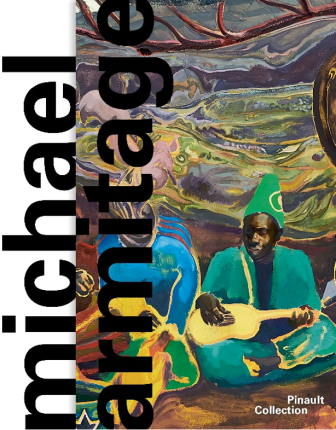
L’esposizione è accompagnata da un catalogo pubblicato in collaborazione con Marsilio Arte (Venezia) con testi di Manthia Diawara, Jean-Marie Gallais, Salman Rushdie, Ocean Vuong, così come un’intervista tra Michael Armitage e Hans Ulrich Obrist.
L’exposition est accompagnée d’un catalogue publié en collaboration avec Marsilio Arte (Venise) avec des textes de Manthia Diawara, Jean-Marie Gallais, Salman Rushdie, Ocean Vuong ainsi qu’un entretien entre Michael Armitage et Hans Ulrich Obrist.
The exhibition is accompanied by a catalogue published in collaboration with Marsilio Arte (Venice), featuring texts by Manthia Diawara, Jean-Marie Gallais, Salman Rushdie, and Ocean Vuong, as well as an interview between Michael Armitage and Hans Ulrich Obrist.